Showing posts with label media. Show all posts

Monday, April 26, 2010

New home sales nothing to write home about

From December 2001 to December 2004 the annual sales pace hovered around 1 million or more homes and in 2005 the annual sales pace peaked at about 1.28 million, before taking a nose dive.

From March of 2009 to March of 2010, the annual sales pace of new homes, reported each month, has broken the 400,000 barrier only four times.

For all of 2008, the new home sales pace averaged 485,000 and then tanked at 374,000 in 2009.

by Broderick Perkins
© 2010 DeadlineNews.Com
Enter The Deadline Newsroom

Unauthorized use of this story is a copyright violation -- a federal crime


Deadline Newsroom - New-home sales rose 27 percent in March to an annual pace of 411,000 new home sales per year.

That was the largest percentage gain since April 1963 and highest annual pace since July of 2009, according to U.S. Department of Commerce data.

What's more, the number was much stronger than the 335,000 pace MarketWatch-surveyed economists expected.

The story played out above the fold on front pages, above the scroll on home pages and all around blogging town.

"U.S. home sales surge"

"Builders rally on bounce in new-home sales"

"Home sales are cookin'" (An Associated Press headline, believe it or not.)

The headlines blared.

"Yawn," the economy replied and rolled back over.

Economists' expectations were probably right on, because without the home buyer tax credit of up to $8,000 and mortgage interest rates' five quarter run on the 5 percent mark, the annual housing sales pace would still be stuck in the middle 300,000s.

Ironically, that's today's going price range for many of those half-million dollar boom-time homes.

Unemployment has surged. Joblessness is cookin'.

Calling the increase to a paltry 411,000 homes sold annually a "surge" is like lacing data with morphine -- but not enough to kill the pain.

New home sales were more than 300 times higher at the peak of the market then they are now. Three hundred times. Since the peak, new home sales have crashed 68 percent -- nearly 70 percent of the new home market -- gone.

From December 2001 to December 2004 the annual sales pace hovered around 1 million or more homes and in 2005 the annual sales pace peaked at about 1.28 million, before taking a nose dive, according to new and existing home sales data compiled by the National Association of Home Builders.

From March of 2009 to March of 2010, the annual sales pace of new homes, reported each month, has broken the 400,000 barrier only four times.

For all of 2008, the new home sales pace averaged 485,000 and then tanked at 374,000 in 2009.

The larger 5 million-a-year resale market fell half as far (Perhaps more, considering the share of distressed properties.). From 2005 (7 million) to 2009 (5 million), the resale sales market has been slashed by about 27 percent, nearly a third, according to the same data.

That's the real story about home sales.

Slashed and burned.

We aren't in Kansas anymore.

It's the land of Catch-22.

Easy mortgage money has gone the way of skyrocketing home sales as the financiers of the greatest recession since the Great Depression cower and ration credit to protect their assets.

You can't buy a home in an economy that's had its legs cut out from under it by the housing market. If the housing market can't get on its feet, well, the economy won't have a leg to stand on.

Even if you have a job and good credit it doesn't mean diddily if the lender had a bad day on Wall Street -- or a good day.

Here's your surge.


• Click on the keywords below for more stories on this subject.

© 2010 DeadlineNews.Com

Advertise on DeadlineNews.Com | Shop DeadlineNews.Com

Get "News that really hits home!" for your Web site or blog from the DeadlineNewsGroup.Com.

You are reading a sample of "News that really hits home!", now available from several beats and published in a growing number of locations.

Broderick Perkins, an award-winning consumer journalist, parlayed 30 years of old-school journalism into a digital real estate news service, the San Jose, CA-based DeadlineNews Group, including DeadlineNews.Com, a real estate news and consulting service and Web site, and the Deadline Newsroom, DeadlineNews.Com's news back shop.

Perkins was the first Examiner to cover three beats for the Examiner.com news service:
National Offbeat News Examiner
National Consumer News Examiner
National Real Estate Examiner

DeadlineNews.Com's Editorial Content Is Intellectual Property • Unauthorized Use Is A Federal Crime


Read more!

Wednesday, February 4, 2009

Busted! Wells Fargo cancels Vegas bash


I don't think so.
"We had scaled back the mortgage event, but in light of the current environment, we have now decided to cancel." What WERE they thinking about?
Wells Fargo Statement
Wells Fargo mortgage officers Vegas bound

by Broderick Perkins
© 2008 DeadlineNews.Com
Enter The Deadline Newsroom

Unauthorized use of this story is a copyright violation -- a federal crime

Deadline Newsroom - Wells Fargo & Co., a bank that received $25 billion from a U.S. Treasury bailout, canceled a four-day corporate event in Las Vegas as other financial firms cut similar perks amid criticism from lawmakers and media inquiries.

"We had scaled back the mortgage event, but in light of the current environment, we have now decided to cancel," the San Francisco-based company said Feb. 3 in a statement.

The lender also abandoned plans for similar future functions.

The move came after the Associated Press reported the bank booked 12 nights at upscale Wynn Las Vegas and Encore Las Vegas, two of that city's posh casino hotels, as part of a conference for top mortgage officials.

Wells Fargo Statement

Wells Fargo Quarterly Earnings

Wells Fargo Investor Relations

Headlines:

Wells Fargo defends, then cancels Vegas junket

Wells Fargo Cancels Mortgage Meeting in Las Vegas Amid Crisis

Wells Fargo cancels Las Vegas events

© 2008 DeadlineNews.Com

Advertise on DeadlineNews.Com

Shop DeadlineNews.Com

Get news that really hits home for your Web site or blog from DeadlineNews.Com.

Broderick Perkins, an award-winning consumer journalist, parlayed 30 years of old-school journalism into a digital real estate news service, the San Jose, CA-based DeadlineNews Group -- DeadlineNews.Com, a real estate news and consulting service and Web site and the Deadline Newsroom, DeadlineNews.Com's news back shop. Perkins is also a National Real Estate Examiner. All the news that really hits home from three locations -- that's location, location, location!


DeadlineNews.Com's Editorial Content Is Intellectual Property • Unauthorized Use Is A Federal Crime


Read more!

Monday, January 26, 2009

Real estate news that isn't hitting home, but should be

While a real estate industry leader is being chided for misleading consumers into thinking the doomed housing market was invulnerable, today's realty industry statistics continue to muddy the waters of information by not revealing how deep the doom has become.

by Broderick Perkins
© 2008 DeadlineNews.Com
Enter The Deadline Newsroom

Unauthorized use of this story is a copyright violation -- a federal crime

Deadline Newsroom - You'll get more accurate and complete news about the state of the housing market from honest, professional journalists working in major media than you will from the real estate industry.

That should go without saying.

But it needs to be said.

Professional journalists, those who write honest news, are supposed to be on a quest to crank copy based on unbiased reporting and corroborated facts that reveal all sides of the story.

On the other hand, a real estate industry leader recently confessed that his calling was to "put a positive spin" on real estate news, even at the onset of a housing crash responsible for triggering the greatest economic downturn since the Great Depression.

In a CNN interview, "Confessions of a former real estate bull," past National Association of Realtors (NAR) chief economist and former Move, Inc. executive vice president David Lereah explained it thusly: "I worked for an association promoting housing, and it was my job to represent their interests."

(Read the complete comments in their full context.)

Okay.

Fine.

Professional journalists work for organizations promoting the right to know and the same First Amendment rights that allow Lereah to fudge.

Who are you going to believe when it comes to what's likely to be the most valuable acquisition you'll ever complete?

Industry mouthpieces who spin, slant and filter the news because of paycheck-induced pressure or professionals whose job it is to represent basic constitutional rights?

Think about it.

Journalists -- true, professionally trained and employed journalists -- also write the first draft of history.

Due to that calling, regardless of what they are paid or who pays them, their careers and credibility are at stake if they fudge for any reason.

Journalism, when practiced on a professional level, is specifically designed to allow you to be the judge, not to tell you what to think, read, believe or do. Journalists -- again, real, professionally trained and experienced journalists working for bona fide media outlets -- get fired if they make stuff up or purposely distort the news.

Real estate industry "news" simply isn't the full story. It comes from a specific point of view. It's biased.

For example, NAR, Lereah's former employer, continues to offer a "Pending Home Sales Index" it describes as "a leading indicator for the housing sector."

Hooey.

The index is "based on pending sales of existing homes" only, according to NAR.

An unknown number of foreclosed and distressed properties, so-called REOs now owned by banks that couldn't sell them at auction, render ridiculous forecasts based solely on homes visible on local and national multiple listing services (MLS).

Those simmering REOs could mean the housing market is in worst shape than the public thinks if it relies solely upon real estate industry numbers, according to CNN, the same news organization that originally reported Lereah's spin.

CNN says in"Flood of foreclosures: It's worse than you think," foreclosures yet to hit the market mean there is far more excess housing inventory than current real estate statistics indicate.

When that unknown supply of homes hits the market, the already very depressed housing market could further implode. Those unaware of the condition or mislead by incomplete data could be … well, we can't print that word.

More inventory means lower prices and lower prices lead to more foreclosures.

CNN's report is based on RealtyTrac's recent revelation that there are far more foreclosed properties listed in its database than foreclosed homes listed in the multiple listing services (MLS) maintained by real estate agents.

Based on listings in four states, California, Maryland, Florida and Wisconsin, RealtyTrac found that the MLS listings included only one third of the foreclosures RealtyTrac has in its database.

RealtyTrac has a total of 1.5 million bank-owned properties on its site.

NAR's statistics are based on MLS data and in November there were 4.2 million existing homes for sale a 11.2-month supply at the current sales pace.

But without including foreclosures on the market and those yet to come, those record high NAR figures, as a "leading indicator," far underestimate the true condition of the housing market and any recovery could be much further down the line than some realty industry "experts" predict.

Lawrence Yun, chief economist for the National Association of Realtors (NAR) conceded to CNN "Many properties that should be listed on the MLS are not listed on the MLS."

Get news that really hits home. Get it here. Get it from national, regional or local real estate news outlets.

Just make sure it's real news and not information slanted by marketing, advertising or employer pressure or otherwise crafted to drive you into a major transaction that isn't sound.

"Rather than the hiss of losing air or a louder pop from sudden deflation, the housing market looks more and more like a powder keg bristling with short fuses." - DeadlineNews.Com, August 2, 2005

"If a time arrives when there are too many risky loans and the economy hits a recession, many homeowners could default on the American Dream and take the economy down with it." - DeadlineNews.Com, April 14, 2005

"The industry has done a fine job of bringing the working poor and others into the realm of home ownership, it hasn't done a good job of teaching them how to hold onto their homes." - DeadlineNews.Com, March 31, 2004.


© 2008 DeadlineNews.Com

Advertise on DeadlineNews.Com

Shop DeadlineNews.Com

Get news that really hits home for your Web site or blog from DeadlineNews.Com.

Broderick Perkins, an award-winning consumer journalist, parlayed 30 years of old-school journalism into a digital real estate news service, the San Jose, CA-based DeadlineNews Group -- DeadlineNews.Com, a real estate news and consulting service and Web site and the Deadline Newsroom, DeadlineNews.Com's news back shop. Perkins is also a National Real Estate Examiner. All the news that really hits home from three locations -- that's location, location, location!


DeadlineNews.Com's Editorial Content Is Intellectual Property • Unauthorized Use Is A Federal Crime


Read more!

Wednesday, January 14, 2009

NAR economist 'put a positive spin' on doomed housing market


Two guys who insisted "Everything is fine."
When real estate industry leaders were trashing the media for too much "doom and gloom" reporting, a well-positioned real estate industry professional was putting a positive spin on what was shaping up to be a doomed housing market.

by Broderick Perkins
© 2008 DeadlineNews.Com
Enter The Deadline Newsroom

Unauthorized use of this story is a copyright violation - a federal crime

Deadline Newsroom - Remember when real estate industry leaders were trashing the media for too many "doom and gloom" stories at the onset of the housing bust?

A well-positioned real estate industry professional was putting a positive spin on what was shaping up to be a doomed housing market.

That spin could have misled some homeowners, causing them not to take action necessary to save their home.

It was the best of times.

It was the worst of times.

The market had peaked with home equity wealth so unprecedented it became known as the "psychological equivalent of gold" - at least for those who got in the market on time.

However, from the Sunshine State to the Golden State, economic forecasts predicted boom housing markets were poised to fall like dominoes.

It was the historic onset of the greatest economic downturn since the Great Depression.

The best-of-the-best in professional media did its job and rightfully reported the so-called doom and gloom.

In good times and in bad, homeowners, consumers, anyone in or out of the real estate market has a constitutional right to all the unfettered information they can get.

With truly unbiased, useful information, many consumers could have escaped a foreclosure disaster that's making Hurricane Katrina look like a walk on a beach.

Forget numbskull proclamations that the "Internet allows anyone to become a journalist."

The whole idea of a professional press is to provide the kind of trained, experienced, unbiased information (via reporting, research, corroboration and editing) people must have to make their own informed decisions.
"If a time arrives when there are too many risky loans and the economy hits a recession, many homeowners could default on the American Dream and take the economy down with it."
-- DeadlineNews.Com, April 14, 2005
More - not less - information could have helped an unknown score of families at least temporarily suspend homeownership with dignity, salvage their credit and remain positioned to one day return to a hearth they could again call their own.

Unfortunately, when the press was cranking copy, as it is charged to do, some realty professionals were seeking what amounted to outright censorship.

What's worse, at least one realty professional was delivering housing market information with an admittedly slanted, job position-induced, 'positive spin' that could have misled homeowners into thinking boom times would never end.

In "Confessions of a former real estate bull" CNN Money Magazine senior writer Donna Rosato recently queried the "famously optimistic" former National Association of Realtors (NAR) chief economist and former Move, Inc. executive vice president David Lereah, now a private consultant with Reecon Advisory Report, a self-proclaimed "weekly source of insight and intelligence on residential real estate."

Sniff.

Word-for-word, here's the text of the interview as it was published online.

"Q. Were you wrong to be so bullish?

A. I worked for an association promoting housing, and it was my job to represent their interests. If you look at my actual forecasts, the numbers were right in line with most forecasts. The difference was that I put a positive spin on it. It was easy to do during boom times, harder when times weren't good. I never thought the whole national real estate market would burst.

Q. The NAR's latest forecast calls for a slight increase in home prices next year. Thoughts?

A. My views are quite different now. I'm pretty bearish and have been for the past year and a half. Home prices will continue to drop. I think we'll see a very modest recovery in sales activity in 2009. But we've still got excess inventories, a bad economy and a credit crunch that will push prices down further, another 5 percent to 10 percent more. It'll take a long time to get back to the peak prices we saw in many markets.

Q. Any regrets?

A. I would not have done anything different. But I was a public spokesman writing about housing having a good future. I was wrong. I have to take responsibility for that."

These comments came from a professed "economist" who, when the market was right at the top of its current tailspin, an economist who had reams of realty market data, research reports, forecasts and other documentation at his fingertips, but an economist who was putting the finishing touches on "Why the Real Estate Boom Will Not Bust - And How You Can Profit from It: How to Build Wealth in Today's Expanding Real Estate Market," published by Broadway Books on February 21, 2006.

Suspend for a moment the tried-and-true notions that when it comes to any investment there's always room for caution, that there is forever the need for risk analysis and that there is an always-on abhorrence for never saying never. Ever.

Shouldn't someone professing to be a real estate economist espouse basic economic principles, ethical business practices and some fiduciary duty in the face of the obviously unsustainable home equity growth that came in an environment of untried, untrue and unreliable assembly-line mortgaging?

If you work for an association pushing homeownership, apparently not.
"Rather than the hiss of losing air or a louder pop from sudden deflation, the housing market looks more and more like a powder keg bristling with short fuses."
- DeadlineNews.Com, August 2, 2005
If this was something concocted by a Washington, D.C. politician we'd be watching another media storm over yet another "Gate" - perhaps a "Housing Gate."

Can't get enough of David Lereah?
• Read the DavidLereahWatch Blog
• Read the Wall Street Journal's "Realtors' Former Top Economist Says Don't Blame the Messenger."

© 2008 DeadlineNews.Com

Advertise on DeadlineNews.Com

Shop DeadlineNews.Com

Get news that really hits home for your Web site or blog from DeadlineNews.Com.

Broderick Perkins, an award-winning consumer journalist, parlayed 30 years of old-school journalism into a digital real estate news service, the San Jose, CA-based DeadlineNews Group -- DeadlineNews.Com, a real estate news and consulting service and Web site and the Deadline Newsroom, DeadlineNews.Com's news back shop. Perkins is also a National Real Estate Examiner. All the news that really hits home from three locations -- that's location, location, location!


DeadlineNews.Com's Editorial Content Is Intellectual Property • Unauthorized Use Is A Federal Crime


Read more!

Sunday, April 20, 2008

Good Time To Buy, But Money's Tight

Consumers are grappling with market conditions that have created a buyers' housing market at a time when economic conditions are scaring off would-be buyers. The media also gets another bashing for consumers' cognitive dissonance.

by Broderick Perkins
© 2008 DeadlineNews.Com

Deadline Newsroom - Falling home prices and rising inventories are putting home buyers in the best position they've had this decade.

Unfortunately those same falling home prices and rising inventories are putting home sellers in the worst home-selling position they've had this decade.

It's quite a quandary for housing consumers.

Two recent polls tell the story.

On April 16, a new Reuters/Zogby poll found that most, nearly 54 percent of consumers, believe it's a good time to buy a home.

On April 13, an Associated Press-AOL Money & Finance poll, found that even more, 60 percent of consumers polled said it was a good time to buy.

Eric Mangan, spokesperson for ForSaleByOwner.com, said, "While today’s real estate market offers low home prices, low mortgage rates and supply of available homes, the missing ingredient to recovery within the housing market has been consumer confidence. (These) findings are a great sign of growing consumer confidence and awareness that market conditions have provided unique buying opportunities."

However, the AP-AOL poll also revealed 60 percent said they won't buy a home in the next two years.

Why the disparity?

Economic fears are causing some consumers to tighten their purse strings. Media-critics also say consumers are being spoon fed an unhealthy diet of national news instead of a balanced meal with local flavor.

The Reuters/Zogby poll said nearly three in four Americans believe the U.S. economy is currently in a recession, and nearly half give their personal financial situation a negative rating.

Also, 81 percent of those polled rated economic policy as "poor."

The AP-AOL poll said one in seven mortgage holders fear they will soon miss a mortgage payment. And three in 10 said they are concerned their home's value will decline over the next two years.

AP-AOL also found that 50 percent of those surveyed believe homes are overpriced. Half think this is a very tough time for first-time buyers and nearly 66 percent says it's tougher for first-timers than it was five years ago.

What's a consumer to do?

Real estate experts, like Marcie Hahn at Williams Realty in Salt Lake City, say pay more attention to your local market, than national surveys.

"A direct impact of this national reporting is that consumers do not realize that, in reality, real estate markets are local, not national, and that the doom and gloom reports broadcast nationwide are not necessarily a true reflection of what is happening in their particular market," said Hahn

Market conditions are most favorable for those who plan to buy now and stay put for years.

"The interest rates are so good right now that this factor alone could actually trump any sort of loss, real or imagined, that a buyer could be worried about by putting in an offer now, said Hahn.

Media bias or media backsliding?

© 2008 DeadlineNews.Com

Advertise on DeadlineNews.Com

Get news that really hits home for your Web site or blog from DeadlineNews.Com.

Broderick Perkins, an award-winning consumer journalist of 30 years, is publisher and executive editor of San Jose, CA-based DeadlineNews.Com, a real estate news and consulting service, and the new Deadline Newsroom, DeadlineNews.Com's new backshop. In both cases, it's where all the news really hits home.


DeadlineNews.Com's Editorial Content Is Intellectual Property • Unauthorized Use Is A Federal Crime


Read more!

Tuesday, April 15, 2008

Assigning Blame For The Housing Hangover

Mortgage brokers and fair housing issues are the latest targets in quantified studies that point the finger of blame at those responsible for the current housing slowdown.

by Broderick Perkins
© 2008 DeadlineNews.Com

Deadline Newsroom - There's plenty of blame to go around in today's sour housing market.

Home buyers who didn't read the small print.

Speculators who didn't read the writing on the wall.

The Federal Reserve for not reading market conditions fast enough.

Now, mortgage brokers are the latest target in a study that says they often didn't give borrowers an opportunity to read the small print.

That missed opportunity cost some borrowers thousands of dollars more than they needed to pay for a home loan.

The extra cost could make the difference between maintaining homeownership or losing it to foreclosure.

"Steered Wrong: Brokers, Borrowers and Subprime Loans" is the first study to quantify the effect of broker compensation on borrowers, according to the Center for Responsible Lending (CRL). The center conducted the study with an analysis of 1.7 million mortgages made between 2004 and 2006.

The study found that borrowers with weak credit often obtained brokered mortgages that carried higher interest rates than the same loan obtained directly from the lender.

In the first four years of a loan, that could cost more than $5,000. Over a 30-year period the extra cost amounts to $36,000, according to the study.

That's not just because borrowers had weak credit. Compensation from lenders to brokers, called "yield spread premiums" or "YSPs" give brokers an incentive to steer borrowers to higher priced mortgages, the study says.

The study also blamed a lack of transparency and the complexity of the loans in the subprime market for making it tough for borrowers to know if there's a cheaper mortgage available.

However, the study also found, for others, brokers can often make a better deal than going directly to the lender.

Those with better credit fare better and get comparable loan prices whether they go through a broker or directly to a retail lender.

Borrowers with very high credit tend to get a better deal through a broker than from a direct lender.

The study recommends that policymakers should ban practices that give brokers an incentive to overcharge subprime borrowers; ensure that lenders take responsibility for brokered loans made in their name and policymakers should set standards requiring brokers to serve customers' interests.

Documented discrimination gets some of the blame

In a related study with another "first" element, the National Fair Housing Alliance documents racial and ethnic discrimination and the lack of fair housing enforcement as a contributor to the foreclosure fallout. That's the first time a documented study links discrimination of the housing hangover.

Marking the 40th anniversary of the passage of the federal Fair Housing Act, the alliance says some 3.7 million people face discrimination when they seek housing, but the U.S. Department of Housing and Urban Development (HUD) only issue 31 related charges of discrimination in 2007 while the Department of Justice filed just 35 cases.

"Lack of federal oversight of the work of mortgage lenders and brokers has led us to today's foreclosure crisis," said Shanna L. Smith, President and CEO of the alliance.

The alliance sites "countless studies" that demonstrate unscrupulous lenders targeted minority buyers yet the total number of fair housing complaints filed represents less than on percent of the annual incidence of discrimination.

"Private fair housing groups with minimal resources have processed 10 times more fair lending complaints than the federal government," continued Smith. "How is this possible? This is inexcusable."

For more on who's to blame (it ain't the media), read:

• Wall Street Journal's "His Legacy Tarnished, Greenspan Goes on Defensive".

• Greg Fielding, J. Rockcliff Realtors, "Why Home Values Are Falling", Bay Area Housing Review Blog.

Also see: DeadlineNews.Com's "The Media Didn't Do It" coverage.

© 2008 DeadlineNews.Com

Advertise on DeadlineNews.Com

Get news that really hits home for your Web site or blog from DeadlineNews.Com.

Broderick Perkins, an award-winning consumer journalist of 30 years, is publisher and executive editor of San Jose, CA-based DeadlineNews.Com, a real estate news and consulting service, and the new Deadline Newsroom, DeadlineNews.Com's new backshop. In both cases, it's where all the news really hits home.


DeadlineNews.Com's Editorial Content Is Intellectual Property • Unauthorized Use Is A Federal Crime


Read more!

Saturday, February 9, 2008

Housing Market Needs MORE, Not Less Media Coverage

Can you hear it? Apparently many consumers can't and maybe the media is to blame. Right now it's a rumble, building and poised to really go bust. If you don't have a tight grip on that fence, you could get knocked right off your financial footing.

by Broderick Perkins
© 2008 DeadlineNews.Com

Deadline Newsroom Special Report - Maybe the media does have a negative role in the current housing market -- just not necessarily as a spoiler.

While some real estate industry leaders have called for the media to back off "negative" news coverage about the housing market, the media may not be laying it on thick enough.

More and more reports -- even those from the media-bashing corners of the real estate industry -- reveal the economy will need a lot more Head-On applied directly to housing's hangover, now expected to be a lot more painful than previously indicated.

Unfortunately, consumers appear to be in as much denial about true housing market conditions as are real estate industry leaders who blame the media for exacerbating the housing market's migraine.

A recent Harris Interactive survey conducted for Zillow.com says 77 percent of homeowners from around the country believe the value of their home increased (36 percent) or remained the same (41 percent) in 2007. Only 23 percent believe their home lost value last year.

They must be reading trade journals.

Given market realities, consumers spoon fed a diet of "positive" news, are due for a real cognitive dissonance choking when it comes time for them to buy or sell.

There's far too much disparity in what consumers believe compared to what's really happening in the nation's housing market.

For example, Standard & Poor’s/Case-Shiller Home Price Indices is a leading measure of single-family U.S. home prices. It has long lamented about over-inflated housing prices and often warned of the dire consequences.

Those warnings weren't the kind of influence-peddling pressure that gives consumers a bad case of denial, but based on polished data to help keep consumers, investors and others, who have a stake in the housing market, from losing their shirts.

The data is clear. Home prices are falling in more and more areas and maybe the media isn't getting through to the majority of consumers who believe home prices are stable or growing.

Case-Shiller's index reveals:

• The overall index is in the 11th consecutive month of negative annual returns and a full two years of decelerating returns, nationwide.

• The smaller 10-City Composite index just had a record annual decline of 8.4 percent, the greatest in 16 years.

• A 20-City Composite index also had a record annual decline of 6.7 percent, the greatest since 2000.

"We reached another grim milestone in the housing market in November," said Robert J. Shiller, Chief Economist at MacroMarkets LLC.

Grim? It's brutal.

"Not only did the 10-City Composite post another record low in its annual growth rate, but 13 of the 20 metro areas, each with data back to 1991, did the same. If you look at the monthly figures, every MSA (Metropolitan Statistical Area) has now posted three consecutive monthly declines. Eight of these MSAs, in addition to the two composites, have had more than 12 consecutive months of falling prices. Fourteen of the 20 MSAs, in addition to the two composites, recorded their single largest monthly decline on record in November. For the 10-City and 20-City composites this was a decline of 2.2 percent and 2.1 percent, respectively (in one month), over October," he added.

It's not just S&P Case/Shiller.

• Investment firm Merrill Lynch says in "Forecast Update: Housing Drags Economy Down The Sink,"
home values are in free fall and will tumble 15 percent this year, and an additional 10 percent in 2009. That's because homes are over valued by as much as 40 percent.

Zillow's own estimates -- "Zestimates" -- culled from 90 percent of the nation's public records on home values, indicate home values declined 5 percent on average last year, with many markets posting much steeper declines.

• The California Association of Realtors (CAR) said in December, home prices in the Golden State declined by 16.5 percent, compared to December of 2006.

When the smoke clears this year, California home prices will be down 8 to 10 percent from 2007, a forecast revised from the previous 4 percent price decline expected for California according to CAR.

• The National Association of Realtors, which calls the Merrill Lynch forecast "too pessimistic" and "unprecedented," continues to hedge its bets, calling for a national median home price decline for existing homes of only 1.2 percent. It previously said, a month ago, prices would be flat in 2008.

The association consistently maintains its conservative forecasts and stays the bullish course on the severely weakened housing market.

Earlier, the trade group forecast that the first quarter this year would come with a record 5.3 percent home drop from year ago levels. The newly revised forecast is a 6.1 percent drop.

But with a 6.1 percent year-to-year drop in the first quarter, and only 1.2 percent decline for the year, the nation's housing market will have to do a fast and furious about face -- right about now.

Truth is, that's not going to happen.

• An ongoing unscientific poll of visitors to the Deadline Newsroom is leaning toward a housing market recovery sometime after 2010.

• That's in line with Moody's Economy.com, which recently projected the beginning of the end would be in early 2009, but only if home builders further curtail housing starts, sellers shave a lot more off asking prices and lenders loosen their purse strings, among other necessary cooperating market conditions.

• Builders have been lowering prices for nearly a year now and that's giving many recent new home owners vertigo from prices spiraling down so quickly. In some cases, newly purchased homes are worth hundreds of thousands of dollars less than they were when purchased just months ago because discounts in the same development has cut into what turned out to be the kind of phantom value Merrill Lynch and S&P/Case-Shiller warned of.

There's more "negative" news.

• The U. S. Census Bureau said compared to one year ago, the fourth quarter 2007 homeownership rate of 67.8 percent represents the largest annual decline in the rate of homeownership since the bureau began tracking the rate in 1965.

An additional 80,000 homes sat vacant and available for sale nationwide in the fourth quarter 2007, compared to a year earlier. The 2.18 million vacant homes for sale in the fourth quarter matched a record set in early 2007.

• Late last year, the U.S. Conference of Mayors posted a grim consensus detailing how spiraling losses from the residential foreclosure crisis would rattle the nation’s largest metro areas.

"Not that long ago, economists said housing was the backbone of our economy," said USCM president Douglas Palmer, Mayor of Trenton, NJ. "Today the foreclosure crisis has the potential to break the back of our economy."

With the mortgage meltdown steeped in credit market investor fear and lender failures, even low mortgage rates won't get buyers to jump off the fence. There's no easy-money safety net to catch them.

Combine the fear of recession with tight mortgage money and it's no wonder potential buyers are grabbing more than a toe-hold on the wait-and-see fence.

It's simple economics. Less demand means still lower prices and maybe, just maybe, it's not such a good time to buy a home, unless you know, without a doubt, that you can buy and sit through the housing hangover for a year or two, if not longer.

Consumers with falling home values or those shopping for appreciating homes shouldn't be under any mistaken or misguided beliefs. They have a right to know what's really going down under that roof over their heads.

Recently, housing coverage most certainly has been "bad news." The coverage is "negative." Unless you hunt realty market carrion, foreclosures, falling home prices and lost equity certainly aren't "positive" news items.

It's not the media's job to cover safe commercial airline landings.

Safe landings don't make the film-at-11 segment.

On the other hand, a cornerstone of the economy crashing and burning?

Now, that's real news.

There was a run on "good" housing news a few years back and well, the media should be fresh out.

Catch the good news again during the next fluff cycle.

- 30 -

Media Bashing Rebutted
Housing Mess Not Media Made
Savvy Consumers Don't Shoot The Messenger
See what Seeking Alpha has to say on this matter.

Advertise on DeadlineNews.Com

© 2008 DeadlineNews.Com

Broderick Perkins, an award-winning consumer journalist of 30 years, is publisher and executive editor of San Jose, CA-based DeadlineNews.Com, a real estate news and consulting service, and the new Deadline Newsroom, DeadlineNews.Com's new backshop. In both cases, it's where all the news really hits home.


DeadlineNews.Com's Editorial Content Is Intellectual Property • Unauthorized Use Is A Federal Crime


Read more!

Sunday, January 6, 2008

National Housing Bust: Four More Quarters

Moody's Economy.com says look for a housing market turnaround in early 2009 -- provided market conditions cooperate.

by Broderick Perkins
© 2008 DeadlineNews.Com

Deadline Newsroom - If you've been wondering when the housing market will turn around, Moody's Economy.com says it has the answer -- early 2009 -- provided market conditions cooperate.

The report, "Aftershock: Housing in the Wake of the Mortgage Meltdown," forecasts the beginning of the end to housing market woes early next year, but only with the alignment of significant housing market conditions.

Given the current state of those conditions, a planetary alignment may also be necessary.

Economy.com's report says to generate a 2009 turnaround, home builders must further curtail housing starts, sellers must shave more off asking prices and lenders will have to loosen their purse strings, among other cooperating market conditions.

To put the housing market on the road to recovery, new homes constructed must fall to 1 million this year, down from the estimated 1.2 million last year.

The report, which incorporates the respected Case-Shiller Home Price Index, a measure of home price appreciation, says the national median home price will have to tumble 12 percent from peak levels. Prices have already fallen 5 percent from their high point, according to "Aftershock" data.

Along with a smaller inventory of homes and lower home prices, a market turnaround will also require more loan modifications to help stop foreclosures from flooding the already oversupplied market.

Creditors must also ease their grip on financing so more consumers can buy homes.

"In this scenario, the housing market finds a bottom by early 2009," the report says.

Unfortunately, the downturn could be prolonged if prices slide too much, too many mortgages fail and money stays hard.

"The ramifications of this for the economy, and thus housing, would be overwhelming. Behind this worry is the financial system's substantial exposure to hundreds of billions in mortgage losses that are set to come," the "Aftershock" report warns.

Another risk is home owners suffering equity losses that amount to too much "wealth effect" erosion.

"As consumers turn more cautious in response to their eroding wealth, the economic expansion will surely waver, but if it falters significantly it will ignite a further devolution of the already reeling housing market," the report further warns.

Without a cooperating convergence of key factors, analysts could begin to use the "C" word -- as in "crash," says the report.

Making no mention of a supposed "media effect," postulated by real estate leaders who say media coverage has exacerbated the housing market slowdown, "Aftershock" sees some light in what it considers "promising" federal policy making efforts.

The report says the Bush Administration, federal legislators and federal regulators are fully engaged in heading off the recessionary impact of the hard-pressed mortgage market.

The Federal Reserve has lowered interest rates, Congress recently passed the "Mortgage Forgiveness Debt Relief Act of 2007," effective January 1, 2008, and lawmakers have several more major pieces of legislation in the pipeline to assist homeowner.

"The most significant upside risk to the housing outlook is that policymakers appear fully engaged in stanching the financial turmoil and ensuring that the economy avoids recession," the report concludes.

Read up.
Media Bashing Rebutted
Housing Mess Not Media Made
Savvy Consumers Don't Shoot The Messenger
Catch up. Read DeadlineNews.Com's "Bubble Boom and Bust."
Bone up. Read DeadlineNews.Com's "Post Boom Survival Guide."

If you don't get it here, well, you just don't get it.

All the news that really hits home!

Advertise on DeadlineNews.Com

© 2008 DeadlineNews.Com

Broderick Perkins, an award-winning consumer journalist of 30 years, is publisher and executive editor of San Jose, CA-based DeadlineNews.Com, a real estate news and consulting service, and the new Deadline Newsroom, DeadlineNews.Com's new backshop. In both cases, it's where all the news really hits home.


DeadlineNews.Com's Editorial Content Is Intellectual Property • Unauthorized Use Is A Federal Crime


Read more!

Thursday, December 20, 2007

Media Bashing and the Real Estate Market

Special to the Deadline Newsroom
© 2007 By Dena Kouremetis

As a regular media contributor to real estate issues for consumer consumption, I know I don't have to go into statistics to make my point on this topic. Numbers about the real estate "depression" are screaming off every page of every newspaper across the U.S.

As a member of both the press and the real estate industries, however, I feel I must express myself regarding the accusation that it's the media that is breaking the backs of the average Realtor.

Wherever I go I hear agents lamenting the "bad press" being doled out that is making consumers terrified of buying or selling homes until the "slump" is over.

I wish everyone would just take a moment to ponder a few things.

The press reports the news -- which means anything NEW happening in any industry. If homes in Indiana, for example, have not suffered through foreclosures or depreciation from the housing and lending debaucles, that means that it's business as usual in Indiana and no news is good news. Why should it be reported?

Real estate professionals may be held just as responsibile for the current sub-prime fiasco as lenders, since their role is to be an advisor as well as a representative to their clients. Why?

• Real estate consultants are the ones who must at all costs, point out the small print to their clients that the lender may gloss over in explanations.

• Real estate consultants are the ones who can advise and disclose, by questioning their clients, if they are about to get into an investment that is way over their heads.

• Real estate consultants are the ones who should be painting worst-case scenarios for an adjustable rate loan's monthly payments. What if the house DOESN"T appreciate? What if the borrower's income DOESN"T go up? What if their credit scores are not enough to permit them to refinance when they have to?

I may be thrown under the bus by a lot of my peers for writing a piece like this, but it's like the sound of fingernails scratching a chalkboard to me to continually hear people maligning the press for what is happening out there. Real estate professionals gleefully collected milions of dollars in commissions in 2004-2005, when multiple offers were rampant in many areas. But when they knew their clients could barely afford the monthly payments on these homes, I really wonder how much counsel they offered to the people who made those commissions possible.

At the time, the real estate industry was clamoring for creative financing so that people who made average incomes in places like the San Francisco Bay Area could buy million-dollar-plus homes, obviously betting on fast apprecation, refinancing when they had to, or turning it for a quick profit. Those same consumers, whose incomes may not have increased significantly since then, are finding that their mortgage's fixed-rate periods have ended or are ending soon and something must be done in order to keep their homes.

True, many of the larger, more corporate real estate companies used "market conditions advisories" when presenting paperwork to their clients, but I wonder how seriously their agents took these important disclosures when advising their clients.

No one has a crystal ball, of course. As Realtors, we must lay things out before our trusting clients and let them make their own decisions. Housing is still one of the best investments around, since God won't be making any more land. And it's a tangible investment that -- no matter what -- you can live in it as long as you can make the payments. Like the stock market, however, this is an investment that can fluctuate in value. Any stockbroker would tell you to diversify and save money for a rainy day,

So to all those real estate professionals who dutifully looked after the best interests of their clients, then, I salute you. And for those who rode the last big wave without making sure people knew what they were getting into, I hope this is a lesson that is difficult to forget.

Just stop blaming the press for what you may have helped to create.

"Media Bashing and the Real Estate Market" Copyright 2007 is reprinted here with permission from Dena Kouremetis.

Dena Kouremetis is a licensed California real estate broker, a homebuilder sales trainer, author and columnist.

• Hear Kouremetis' "Uncharted Waters: Navigating the Purchase of a New Production Home," an educational podcast series about buying a newly constructed home.

Media Bashing Rebutted
Housing Mess Not Media Made
Savvy Consumers Don't Shoot The Messenger

Editorial Content Is Intellectual Property • Unauthorized Use Is A Federal Crime


Our weekly Deadline Newsroom Feed is looking for an advertising sponsor. Contact us at editor@deadlinenews.com and put "Deadline Newsroom Feed Sponsor" in the subject line. The rate is $200 per month on a month-to-month basis; $150 per month with a long-term contract, billed monthly.


Read more!

Thursday, November 15, 2007

Under-Reported Concerns Of Buyers Exposed

by Broderick Perkins
© 2007 DeadlineNews.Com

Deadline Newsroom – A real estate industry trade group that serves only buyers says their constituency isn't getting the straight scoop about housing market conditions and they want to set the record straight.

From delayed agency disclosures and "fake" buyer agents to poor home inspections and shoddy new home construction -- with the media making matters worse -- the National Association of Exclusive Buyer Agents (NAEBA) says it has the full story.

Too often, says the group, media attention is focused on sellers when buyers are besieged by just as many new challenges in the boom-gone-bust housing market.

"When you’re shopping for a new home, you face many challenges. Picking a location, deciding how much you can afford, and securing the right financing are some of the most commonly discussed issues that you must solve," according to "Under-Reported Home Buying Issues" a survey of NAEBA members who were asked to identify the most under-reported issues facing home buyers.

The members also offered solutions for buyers facing those issues.

The report continues, "However, you should also be aware that there are many new and challenging issues which are not as often discussed, but which can be just as important."

While NAEBA claims obviously don't apply to every media outlet, especially those that cover real estate full time, here are some of the issues the group would like to see addressed more often.

Fake buyer agents. Operating under a strict code of ethics and pledging undivided loyalty, NAEBA members represent buyers exclusively.

Without the dual role as a seller's agent, according to NAEBA, buyers agents are able to address only buyers' needs and concerns without being distracted by the business of managing sellers and their listings.

There's also the potential for a conflict of interest should a single brokerage represent both buyer and seller in the same transaction, something called "dual agency," a practice that's outlawed in some states.

However, according to the NAEBA report, some non-members feign NAEBA affiliation or misrepresent themselves as buyers agents.

Buyers who want exclusive representation should seek NAEBA certification, a written representation service contract and a track record of satisfied customers.

One-stop shopping. One-stop shopping (a bundle of realty, finance and related services offered by a real estate brokerage) is marketed as a convenience to housing consumers. The bundle may offer the best deal, but consumers won't know that if they don't first shop around individually for all the services they need. Shopping around and comparison shopping is the hallmark of savvy consumerism.

Poor local news coverage. NAEBA says local news outlets too often don't abide by journalism's code of ethics if much of their ad revenues stem from the real estate community. Unbiased or broad based news coverage can difficult for media outlets that don't want to alienate advertisers, says NAEBA.

Consumers are advised to look for advertisements disguised as news stories and see them for what they are, be aware of the limitations of smaller, local media outlets supported by real estate ad revenues and take time, over time to examine a media outlet's editorial content.

DeadlineNews.Com recently raised related issues in "Finding News That Really Hits Home".

Buying foreclosed properties. Foreclosures sound like a good deal. Below market prices can be alluring, a cottage industry of infomercials say they are a steal and they are flooding the market right now. However, a foreclosure acquisition doesn't follow the more structured path of a conventional listing purchase. Without a real estate agent or other expert to provide some specialized hand-holding, a novice could lose his or her shirt -- and the 'deal.'

Websites not providing the full inventory of available property. Not all realty Web sites provide all available listings in a given area, but opt to provide only their agents' listings. Other companies don't manage their Web sites well, causing listings to fall out of date.

Larger Web sites, dedicated to listings and smaller ones that link to the larger pools of listings do a better job at scouring the market. A savvy real estate agent can also root out all listings available in a given area and, in some cases, even find properties that are for sale, but not listed.

Inadequate home inspections. Pre-inspections offered buyers as a convenience from sellers, says NAEBA, can be quickie inspections rather than a thorough once over.

Even if a seller provides what appears to be an expert inspection that comes with a guarantee, buyers making what's likely to be the largest purchase ever, should always hire their own inspector.

The inspector should be licensed locally or certified by a national trade group like the American Society of Home Inspectors. Local certification offers another layer of protection.

Like choosing any professional, get referrals from family, friends, co-workers, professional associates or others you trust.

Poor quality in new construction. Professional studies and grassroots action groups repeatedly reveal new homes are always defect-free for a variety of reasons, including the fact they are built by imperfect humans.

Consumers should make every effort to have a new home inspected while it is under construction during several phases, foundation, framing, wiring and plumbing and upon completion. Builders may not make this an easy task, but consumers can have new homes inspected by a professional during or before your final walk through.

Editor's Note: DeadlineNews.Com frequently covers all the issues mentioned in this report. A few recent and timely examples are below. Check out the DeadlineNews.Com Index Page for our complete archives of full coverage of the residential real estate market.

DeadlineNews.Com's founder, publisher and editor, Broderick Perkins has been covering the real estate market for nearly a quarter century.

Check us out for news that really hits home.

Finding News That Really Hits Home
It's a Good Time For A Home Inspection
Many Left Behind In Real Estate School
Buying Foreclosures Not For The Novice
Timely Defect Litigation Guide Book Published

© 2007 DeadlineNews.Com

Broderick Perkins, an award-winning consumer journalist of 30 years, is publisher and executive editor of San Jose, CA-based DeadlineNews.Com, a real estate news and consulting service, and the new Deadline Newsroom, DeadlineNews.Com's new backshop. In both cases, it's where all the news really hits home.


DeadlineNews.Com's Editorial Content Is Intellectual Property • Unauthorized Use Is A Federal Crime


Read more!

Tuesday, November 13, 2007

Finding News That Really Hits Home

Reducing housing market conditions to rabid rhetoric aimed at the media robs real estate consumers of their right to know. Here's how to spot real realty news.

by Broderick Perkins
© 2007 DeadlineNews.Com

• See what Seeking Alpha commentators have to say on this subject.

Deadline Newsroom – Which of these three sets of comments are most relevant for housing consumers in today's real estate market?

No. 1: "Builders cannot allow the national media to report what it deems to be the proper perspective on the value of real estate. Builders must get out in full force and spread, with repetition, one simple message: 'Real estate is the single best investment one can make.' "

No. 2: "Can't wait to read how the local papers will handle the news that closed sales are up (in the San Francisco Bay Area) from Sept. to October. These stories won't be written for a few weeks. I am sure they will find a way to turn positive news into a negative."

No. 3: "If you're a repeat buyer that's going to be in this community (Silicon Valley) for the long haul and you're looking for a home, this is as good a time or perhaps a better time than anytime in the last two or three years. But don't assume (that in) the better-priced, better-condition homes in neighborhoods where conditions favor the seller, that you're necessarily going to get a deal."

Well, obviously, No. 3.

All three sets of comments are the real words of real estate industry leaders who are experts and professionals in their field.

As such, they are also media sources or likely to be. Because the public generally looks up to industry leaders for direction, the media has a duty to call industry leaders on spurious, misleading comments that could hinder the public's grasp of the issues.

The media's job, in part, is to provide all the relevant information possible so that media consumers can both understand issues in the news and make informed decisions about those issues.

Two sets of comments above are suspect for obvious reasons. The first suggests censorship and, seemingly from the Twilight Zone, myopic mantra chanting.

The second professes to see the future, before the ink on the first draft of history (journalism) is dry.
With eloquent credibility, the third set of comments trumps them both.

It's sobering, balanced, market-local and without broad strokes painted in neither rosy pinks nor hues of blue.

It is a recent quote from Colleen Badagliacco, president of the California Association of Realtors, responding to questions from real estate writer Sue McAllister for the Q&A article, "Realtor: 'Just Be Cautious' " in the San Jose (CA) Mercury News.

It's a good example of credibility from a source, a key element in the best real estate news coverage.

There's no need to out the two real estate media detractors offering the first set of sample comments. Ironically, because the media is not censored, they live free to step forth, identify themselves and opine in the same media spaces they would like to see restrained from housing market coverage.

The point is, just as consumers must always do their housing homework -- and check it twice -- they should also learn how to spot media coverage that will best help them with their homework.

Right now, that's more true than ever.

There's no time for blame gaming, fault shifting or finger pointing. News sources, professionals from the residential real estate community and the media all have a credibility responsibility to those who really pay the bills, the real estate and media consuming public.

Here's how the public can find news that really hits home.

• Credibility is key. Seek out real estate news that's credible.

Track records of journalists, media outlets and their sources can help determine credibility.

Just as you should examine a housing market's past to understand the present, don't judge a journalist or media outlet solely by the story in front of you. Don't judge a source by single sound bite.

Just as you want a licensed or certified professional helping you buy or sell a home, choose professional media outlets and writers schooled and experienced in the field. Seek sources who provide relevant, balanced comments and information rather then self-serving rabid rhetoric and emotional barbs.

Examine journalists' and media outlets' bios, online "abouts," and past articles as well as their current attention to the housing market.

Journalists who choose real estate as their primary or only beat tend to have the most experience, much like any specialist. Media outlets that devote more time, resources or space to housing market coverage tend to do a better job.

• Balance bolsters credibility. Balance -- wrong-right, good-bad, up-down, all sides of the story -- isn't always black and white. If a journalist or media outlet provides 50-50 balance in every story, every day, all the time, be wary.

Media experts say the global warming issue was buried so long because the media gave "equal time" to quacks, naysayers and overnight climate change "experts," at the expense of valid information from scientists who spent decades studying the issue.

A news story is simply not always a 50-50 proposition. Some stories are complicated, multi-tiered events that require a series of articles to unfold. Others are a simple set of facts.

Instead of seeking 50-50 balance in every story, determine how well a journalist or media outlet manages balance over time. With balanced coverage there may be "good" news today and "bad" news tomorrow. In the end, after a relative short period of time, a good journalist or media outlet will cover all the bases.

• Analysis backs up balance. Analysis offers more in-dept "So what?" coverage. It goes beyond simply stating the facts and telling the story to explain what the news means and often, how to cope with what's been learned.

Not all news stories are designed for analysis, but the more the merrier.

Analysis is key in today's real estate market. For example, more than 2 million people are likely to lose their homes to foreclosure during the current housing downturn. So what? What does that mean to me? How can I determine if I'm a likely victim? If I am a likely victim, what can I do to prevent losing my home?

That's analysis.

Here's another example. Lenders are squeezing home buyers for more income and employment documentation, larger down payments and higher credit scores. A story saying so could also tell news consumers how to secure the newly required documentation (even if you work at home); how to find lenders not requiring larger down payments or how making a smaller down payment could cost more; how to raise credit scores and how to seek out more accommodating lenders.

News, in part, is designed to provide information that can be used to make sane decisions. Explaining the options and providing coping techniques aids in the decision making process.

• News vs. Opinion. Understand the difference between news, opinion and hybrid stories.
News stories are largely unbiased, objective articles comprised of facts from credible sources including experts and other informed individuals; documents, including studies, reports and polls; and often research to compare and contrast today's information with past information.

News stories can be one or a series of heavy, in-depth, investigative pieces with corroborated facts and information. They can be light features about people, places or things of interest, but again, based on reliable information and facts. And, they can be analysis pieces that offer fact-based advice.

A key giveaway? The professional writing or reporting a news story doesn't use adjectives. Adjectives are subjective, somewhat biased words based on or influenced by personal feelings, tastes, or opinions.

Seek news stories loaded with credibility, balance and, whenever possible, analysis.

Opinion, editorials, Op-Ed pieces and the like, are the stuff of editorial pages, broadcast shows with a single or combative pair of talking heads, and online, blogs. Opinion pieces are just that, an individual's beliefs, views, judgments or point-of-view about something, and not necessarily based on fact or knowledge. They take a stand.

The best opinion pieces are spun from facts or knowledge and don't just opine or blather on emotionally without offering some solution, alternative or hoped-for outcome.

Generally opinion pieces are labeled as such, or should be, but look for a flurry of adjectives.

Hybrids, like this wonderful article, are a mix of news and opinion, even analysis and can be useful to both make a point and share useful information helpful in making decisions.

Is The Housing Mess The Media's Fault? Toll Brother's CEO Says It Is
Media Still Not Responsible For Housing Woes
Savvy Consumers Don't Shoot The Messenger
Housing Mess Not Media Made

© 2007 DeadlineNews.Com

Broderick Perkins, an award-winning consumer journalist of 30 years, is publisher and executive editor of San Jose, CA-based DeadlineNews.Com, a real estate news and consulting service, and the new Deadline Newsroom, DeadlineNews.Com's new backshop. In both cases, it's where all the news really hits home.


DeadlineNews.Com's Editorial Content Is Intellectual Property • Unauthorized Use Is A Federal Crime


Read more!

Friday, November 2, 2007

Media Still Not Responsible For Housing Woes

by Broderick Perkins
© 2007 DeadlineNews.Com

Deadline Newsroom – Implications the media is somehow to blame for the state of the housing market generates the mental image of a blind weasel doing the Shuffle.

At first, it's novel, a real hoot, and quite a spectacle.

But it gets old fast, like any stupid pet trick.

Veteran real estate professional Joe Brown, president and chief operating officer of Coldwell Banker's Silicon Valley operations, overseeing two offices and 185 sales associates, was the latest to suggest the media is the primary culprit behind consumer behavior in today's tumultuous housing market.

To Brown's defense, during a pre-recorded interview with KLIV Radio 1590-AM in San Jose, CA, the producers spliced in a somewhat leading question ahead of Brown's response.

There should have been a follow up question to the response, if only to make sure Brown said what he meant to say and so that listeners didn't get his comment out of context.

In any event, in the pre-recorded context of the interview, the reporter asked Brown what's shaking buyers' and sellers' confidence in the market.

Brown replied, "I would say that the biggest impact right now, even though the economy is holding strong, is public opinion, and what they hear and read in the media plays a big part on whether they think it's a good time to buy or sell."

The statement instantly became an enigma wrapped in a riddle.

First, the comment was misleading, which, in part, is why KLIV should have called him on his answer during the recording.

The economy is not holding strong.

The Labor Department said this week, based on payroll estimates, the economy generated 166,000 jobs in October and unemployment held steady at 4.7 percent, thanks to stability in technology, small business and health care, as well as the lower-paying leisure and hospitality industries.

However, unemployment held steady because a separate household survey of real people revealed 200,000 people left the workforce.

Wages, rising only 3.8 percent since last year, aren't providing much of a cushion against declining home values and rising energy costs.

Gasoline is more than $3 a gallon in California, oil barons are poised to dump $100-a-barrel crude on the market and the housing-related finance crunch forced the Federal Reserve to lower interest rates again and pump another $41 billion into the economy to keep the credit-pinch from inducing an economic tailspin.

Thanks to the economy's 800 pound gorilla -- the mortgage-related financials sector -- Wall Street was a stomach-churning rollercoaster Halloween week.

That's not economic strength -- unless your mansion's 1,000 square-foot carriage house is full of Google stock options at $700 a share.

It's the economy withdrawing from a crack-like addiction to mainlined subprimes, Ninja loans, and ARMs and way, way too much dependence on fossil fuels.

Through all this economic news from a host of sources, there's Brown's implication that the media is the primary force directing the course of buyer and seller behavior and, by association, the course of the residential real estate market.

If only the media would just shut up and stop contributing to public opinion.

That's the companion cry-me-a-river implication that always comes with media bashing. If the media didn't report market conditions at the level at which they are actually occurring, consumer confidence would somehow gravitate to some higher plane of getting and spending discretionary cash.

Never mind that before there was a media and things went awry, the townsfolk hoisted axes, lit torches and marched down to the town square searching for truth in a pile of someone's cinders.

Even if we did live in that insane bizarro world where the media ignored the mortgage squeeze, wouldn't consumers discover they'd been had when the same mortgage application approved two years ago now comes back rejected?
Wouldn't they sort of figure it all out without being spoon fed by the media mind benders?

Less knowledge doesn't make consumers more confident.

It pisses them off.

What has consumers' knickers in a knot isn't the act of reading or watching the news. Such a simplistic rendition of today's complex economic conditions is a twisted denial of reality.

Consumers know what's happening to them. They are more and more often blocked from homeownership. They are losing hope and homes at a rate 100 percent greater than a year ago. The media isn't taking their homes.

Consumers know they trusted a housing market that sold them a bill of goods packaged with corruption and collusion likened to organized crime.

New York Attorney General Andrew Cuomo isn't suing First American Corp. subsidiary eAppraiseIT because of something printed in paper. The suit alleges the company "caved to pressure from Washington Mutual" to inflate property values of homes.

California recently passed a law making appraisal pressure illegal, not because a talking head on the nightly news lobbied Golden State legislators. Many appraisers bowed under increased pressure throughout the last housing boom and consumers were left holding the bag with over-priced homes that are now plunging in value.

Book cooking allegations are rising over the housing boom-spawned mortgage-backed securities sector, the Federal Bureau of Investigations, Secret Service and U.S. Postal inspectors have a growing case load of mortgage fraud which soared to record heights during the housing boom and federal regulators acted (far too slowly) several times in recent years to shore up regulations to give consumers greater protections when they go shopping for home loans.

Most consumers left twisting in the wind wind up financially ruined. Fifty-seven percent of foreclosure-prevention counselors surveyed by the California Reinvestment Coalition found the most common outcome for the homeowners they work with is foreclosure. A short sale outcome was reported by 33 percent of the counselors.

The media's job isn't to tell readers the sun is shining when their home is submerged in three feet of water. If the news is bad, it gets reported. In the next cycle, when the news is better, happy days will be here again -- in ink, online and on the air.

Rather than a society of censorship, we live in a free market where, for better or for worse, merchants get to try their untested, unregulated shenanigans on an unsuspecting public which too frequently doesn't know better to read the small print.

That's where the media comes in.

It's called the right to know.

It's either that or torches blazing across the town square.

Is The Housing Mess The Media's Fault? Toll Brother's CEO Says It Is
Savvy Consumers Don't Shoot Messenger
Housing Mess Not Media Made

© 2007 DeadlineNews.Com

Broderick Perkins, an award-winning consumer journalist of 30 years, is publisher and executive editor of San Jose, CA-based DeadlineNews.Com, a real estate news and consulting service, and the new Deadline Newsroom, DeadlineNews.Com's new backshop. In both cases, it's where all the news really hits home.


DeadlineNews.Com's Editorial Content Is Intellectual Property • Unauthorized Use Is A Federal Crime


Read more!

Friday, October 12, 2007

Nobel Peace Prize Brings Global Warming Message Home

by Broderick Perkins
© 2007 DeadlineNews.Com

"What is the use of a house, if you haven't got a tolerable planet to put it on?"
-- Henry David Thoreau

Deadline Newsroom – The Nobel Peace Prize for 2007 went to former Vice President Al Gore and a joint global agency because they've been instrumental in bringing the global warming message home.

"The Norwegian Nobel Committee has decided that the Nobel Peace Prize for 2007 is to be shared, in two equal parts, between the Intergovernmental Panel on Climate Change (IPCC) and Albert Arnold (Al) Gore Jr., for their efforts to build up and disseminate greater knowledge about man-made climate change, and to lay the foundations for the measures that are needed to counteract such change," said Professor Ole Danbolt Mjoes, Chairman of the Norwegian Nobel Committee, announcing the award on November 12.

The IPCC was formed in 1998 by the World Meteorological Organization (WMO) and the United Nations Environment Programme (UNEP) to address climate change on a global level.

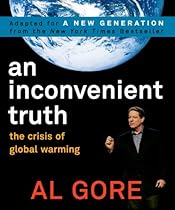
The IPCC's series of "Climate Change" reports provides the basis for much of Al Gore's Oscar-winning 2006 "Inconvenient Truth" documentary (#16 on Amazon's DVD sales chart) and book by the same name.

Consider the Gore-IPCC team effort the gift of climatic cognizance.

Prior to presenting IPCC's work in documentary form, global warming was often considered quackery, political conspiracy and down right fabrication.

For years after the IPCC's first report, the media, attempting to be fair and balanced, often gave groundless naysaying as much ink as the studied research from scientists. The media concedes its initial reaction to IPCC reports delayed what today has become wide spread acceptance and action to stop the effects of global warming.

Greenhouse gasses are the culprit and humans play a large part. Burning fossil fuels -- gasoline in motor vehicles, heating oil in homes, coal in factories -- among other actions, contribute to the gasses. Greenhouse gasses cause the planet to heat up and that results in climate change -- hotter summers, colder winters and more severe storms, according to the IPCC and most scientists and scientific groups studying the issue.

Fifty years from now, The World According To Al Gore doesn't include much of Manhattan, the Florida Peninsula, the San Francisco Bay Area or other coastal and low-lying regions where, within a half century, homes could be under 20 feet of water as oceans swell from glacier-melting temperatures.

Other reports reveal higher temperatures are creating more drought, heatwaves and desert sprawl.

Since Gore borrowed a page from Hollywood drama, however, more attention has been given to where and how communities are planned and developed, to "greener" more sustainable conservation-minded lifestyles and, at the individual level, to where to live -- or not to live.

"Indications of changes in the earth's future climate must be treated with the utmost seriousness, and with the precautionary principle uppermost in our minds. Extensive climate changes may alter and threaten the living conditions of much of mankind. They may induce large-scale migration and lead to greater competition for the earth's resources," said Mjoes during the prize announcement.

The Nobel committee said IPCC, using scientific data during the past two decades has created a consensus about the connection between human activities, global warming and the consequences.

Gore was noted for his tireless efforts as "one of the world's leading environmentalist politicians."

"He is probably the single individual who has done most to create greater worldwide understanding of the measures that need to be adopted. By awarding the Nobel Peace Prize for 2007 to the IPCC and Al Gore, the Norwegian Nobel Committee is seeking to contribute to a sharper focus on the processes and decisions that appear to be necessary to protect the world's future climate, and thereby to reduce the threat to the security of mankind. Action is necessary now, before climate change moves beyond man's control," Mjoes said.

Half of Gore's $1.5 million prize was slated for the Palo Alto, CA-based Alliance for Climate Protection where he was scheduled to speak the day the award was announced. Gore co-founded the Alliance, a bipartisan, non-profit organization, as a vehicle for raising money to encourage Americans to find ways to address global warming.

If You Are Interested: Broderick Perkins was one of the first journalists to make the global warming-housing connection and to regularly visit the Global-Warming-Hits-Home issue.

• DeadlineNews.Com offers more green news that hits home.

• DeadlineNews.Com offers more global warming news that hits home.

© 2007 DeadlineNews.Com

Broderick Perkins, an award-winning consumer journalist of 30 years, is publisher and executive editor of San Jose, CA-based DeadlineNews.Com, a real estate news and consulting service, and the new Deadline Newsroom, DeadlineNews.Com's new backshop. In both cases, it's where all the news really hits home.


DeadlineNews.Com's Editorial Content Is Intellectual Property - Unauthorized Use Is A Federal Crime


Read more!