Showing posts with label affordable housing. Show all posts

Tuesday, May 10, 2011

Bank owned property boom, bonanza for buyers

Clear Capital's Home Data Index (HDI) Market Report for March, reported that housing prices in the West were the first to experience a rebound from prior bottom prices, only to sink again, and suffer what's called a "double dip." The rest of the nation wasn't far behind.

by Broderick Perkins
© 2010 DeadlineNews.Com
Enter The Deadline Newsroom
Unauthorized use of this story is a copyright violation -- a federal crime

Deadline Newsroom - The long anticipated "double-dip" in home prices has arrived and it's fueling a fast-spreading fire sale in every corner of the nation's housing market.

The weak economy and a second surge in discounted bank-owned properties are behind the second-time-around dip that's positioning more and more fence-sitters for a clear shot at bargain-basement deals throughout the rest of the year.

Clear Capital's Home Data Index (HDI) Market Report for March, reported that housing prices in the West were the first to enjoy a rebound from prior bottom prices, only to sink again, and suffer what's called a "double dip."

Get the full story here: Bank Owned Property Boom, Economy Deliver Double-Dip Bonanza For Buyers

• Click on the keywords below for more stories on this subject.

© 2010 DeadlineNews.Com

Advertise on DeadlineNews.Com | Shop DeadlineNews.Com

Get "News that really hits home!" for your Web site or blog from the DeadlineNewsGroup.Com.

You are reading a sample of "News that really hits home!" now available from several beats and published in a growing number of locations.

Broderick Perkins, an award-winning consumer journalist, parlayed 30 years of old-school journalism into a digital real estate news service, the San Jose, CA-based DeadlineNews Group, including DeadlineNews.Com, a real estate news and consulting service and Web site, and the Deadline Newsroom, DeadlineNews.Com's news back shop.

Under the DeadlineNews Group umbrella:

Perkins is managing editor of HomeAway.com's Gulf Coast Response Center.

Perkins was the first Examiner to cover three beats for the Examiner.com news service:
• National Real Estate Examiner
• National Consumer News Examiner
• National Offbeat News Examiner

Other DeadlineNews Group Feeds are available from DeadlineNews.Com.

DeadlineNews.Com's Editorial Content Is Intellectual Property • Unauthorized Use Is A Federal Crime


Read more!

Tuesday, April 13, 2010

Housing affordability allows some "green" workers to buy, not most community workers

greenhouse
More "green house" news
To determine home buying affordability, the Center for Housing Policy considered the income required to qualify for a mortgage for a given area's median priced home. Assuming a 90 percent loan-to-value (10 percent down), monthly payments, at no more than 28 percent of household income, were calculated to include loan principal and interest as well as private mortgage insurance, estimated taxes and homeowners insurance.

by Broderick Perkins
© 2010 DeadlineNews.Com

Enter The Deadline Newsroom

Unauthorized use of this story is a copyright violation -- a federal crime


Deadline Newsroom - Some Americans who find employment refuge in certain areas of the nation's emerging "green" economy can often afford to buy a home, but most rank and file community workers still can't benefit from lower home prices and cheaper financing.

The Center for Housing Policy's "Paycheck to Paycheck: Wages and the Cost of Housing in America" found the income needed to purchase a median-priced home dropped in 93 percent in 208 markets studied, but among 65 types of workers, many still do not earn enough to own a home.

Mortgage rates remain relatively low and home prices in some markets have plummeted from 30 to 50 percent from the peak, but consumers simply aren't buying homes largely because they just can't afford to.

For some who can afford homes, tight credit and stiff underwriting rules close the door on their efforts.

To determine home buying affordability, the center considered the income required to qualify for a mortgage for a given area's median priced home.

Assuming a 90 percent loan-to-value (10 percent down), monthly payments, at no more than 28 percent of household income, were calculated to include loan principal and interest as well as private mortgage insurance, estimated taxes and homeowners insurance.

Full story here: "Housing affordability allows some "green" workers to buy, not most community workers"

• Click on the keywords below for more stories on this subject.

© 2010 DeadlineNews.Com

Advertise on DeadlineNews.Com | Shop DeadlineNews.Com

Get "News that really hits home!" for your Web site or blog from the DeadlineNewsGroup.Com.

You are reading a sample of "News that really hits home!", now available from several beats and published in a growing number of locations.

Broderick Perkins, an award-winning consumer journalist, parlayed 30 years of old-school journalism into a digital real estate news service, the San Jose, CA-based DeadlineNews Group, including DeadlineNews.Com, a real estate news and consulting service and Web site, and the Deadline Newsroom, DeadlineNews.Com's news back shop.

Perkins was the first Examiner to cover three beats for the Examiner.com news service:
• National Offbeat News Examiner
• National Consumer News Examiner
• National Real Estate Examiner

DeadlineNews.Com's Editorial Content Is Intellectual Property • Unauthorized Use Is A Federal Crime


Read more!

Thursday, March 18, 2010

Multigenerational households huddle to keep hope, history, elders alive

shutters
CR: 'Yes!' 3D TV 'impressive'
Brings movie experience home
"Multigenerational homes are certainly wonderful for older and younger Americans on an emotional level, but aside from this, it may be a necessity. As our population ages and lives longer than ever before, we're beginning to turn to our children and other family members for financial, physical and emotional help as we age."

by Broderick Perkins
© 2010 DeadlineNews.Com

Enter The Deadline Newsroom

Unauthorized use of this story is a copyright violation -- a federal crime


Deadline Newsroom - The nation's First Family mirrors a growing housing trend in America.

Marian Robinson, lives with her daughter, Michelle Obama; her granddaughters, Malia and Sasha; and her son-in-law, President Barack Obama.

The primary reason other families triple up is often an economic one that doesn't impact the First Family, but the White House home it is an example of why multigenerational living isn't only about hard times.

"To have grandma and grandpa living with their grandkids, getting to know them better, bonding and caring for each other is a an experience they would not have had living separately," said Diann Patton, the Coldwell Banker's real estate consumer specialist.

Over the past year, more than one in three Coldwell Banker real estate professionals surveyed said they've noted an increase in home buyers looking to create a multigenerational household.

(Also see the Pew Research Center's "Return of the Multi-Generational Family Household")


A multigenerational household typically is one in which there are more than two generations, say grandparents, parents and children, including adult children, but it can also include aunts, uncles, cousins and other family members.

A U.S. Census's report, "Current Population Survey (CPS) - America's Families and Living Arrangements: March 2009" says there were nearly 5.5 million multigenerational households in America last year. In households with parents and their kids, nearly 2 million households also included both grandparents; another 2.8 million included a grandmother; and another 655,000 included a grandfather.

Gardena, CA-based Geriatric care manager, Dr. Marion Somers, Ph.D. (AKA DrMarion.org) says having an older person in the house helps keep the family roots firmly grounded.

Multigenerational households are a way, in the oral tradition, to learn about ancestors and family history and to reincorporate old, long lost family traditions.

For many ethnicities, multigenerational living is simply a cultural way of life.

"Multigenerational homes are certainly wonderful for older and younger Americans on an emotional level, but aside from this, it may be a necessity. As our population ages and lives longer than ever before, we're beginning to turn to our children and other family members for financial, physical and emotional help as we age," Dr. Somers said.

Affordability

Indeed, topping the list of why families are huddling more generations under one roof is a financial decision.

Thirty-nine percent of Coldwell Banker agents cited financial reasons as the trend's driving force. Sharing the mortgage and having adult children paying rent makes housing more affordable.

"The current economic climate has certainly contributed to the increased demand for multigenerational housing. Not only are we seeing parents with dwindling retirement accounts move in with their children, we're also seeing children move in with their parents," said Kurt Gleeson, vice president of sales for RealEstate.com

Likewise, sharing other household costs -- insurance, property taxes, upkeep, groceries, etc. -- helps keep a roof over head.

"My mom was a single mother. My sisters and I lived downstairs and my grandparents lived upstairs," said Kim DiBenedetto, a real estate agent with Coldwell Banker Del Monte Realty-Junipero in Carmel.

"It's good for children because they have grandparents around, as well as the savings on property taxes, utilities and other shared expenses. If you are pooling resources you can get something larger and nicer, also" she added.

Health care

Among Coldwell Banker agents approached about multigenerational living, 29 percent said health care was a reason. The bottom line, again, is saving on the cost of assisted living or other health care facilities, but there's also the psychological benefit of not shipping older relatives off to some strange place.

"The current economy just reinforces the fact that nursing homes, assisted living facilities, and other care facilities may no longer be financially-viable options. We're only going to continue to see more of this trend," said Dr. Somers

Family bonding

Family bonding was another prominent reason for multigenerational housing being on the rise, according to Coldwell Banker agents surveyed. Grandparents, as well as aunts, uncles and cousins under the same roof creates a stronger connection, a close-knit family.

"I think this is one of the unexpected surprises that come with multigenerational living," said Patton.

• Another could be the "green" aspect.


• Click on the keywords below for more stories on this subject.

© 2010 DeadlineNews.Com


Advertise on DeadlineNews.Com | Shop DeadlineNews.Com

Get "News that really hits home!" for your Web site or blog from the DeadlineNewsGroup.Com.

You are reading a sample of "News that really hits home!", now available from several beats and published in a growing number of locations.

Broderick Perkins, an award-winning consumer journalist, parlayed 30 years of old-school journalism into a digital real estate news service, the San Jose, CA-based DeadlineNews Group, including DeadlineNews.Com, a real estate news and consulting service and Web site, and the Deadline Newsroom, DeadlineNews.Com's news back shop.

Perkins is also the first Examiner to cover three beats for the Examiner.com news service:
• National Offbeat News Examiner
• National Consumer News Examiner
• National Real Estate Examiner


DeadlineNews.Com's Editorial Content Is Intellectual Property • Unauthorized Use Is A Federal Crime


Read more!

Monday, December 21, 2009

Improved 'housing affordability' only relative

dlnlogo
We've gone offbeat!
Quick! Click my head!
Improved housing affordability in recent years, due to lower home prices, cheaper mortgage rates and tax credits doesn't amount to a hill of beans when it comes to higher utility costs, interest rate adjustments and unemployment that's impacting tens of millions of Americans.

by Broderick Perkins
© 2009 DeadlineNews.Com

Enter The Deadline Newsroom

Unauthorized use of this story is a copyright violation -- a federal crime


Deadline Newsroom - Forget years of falling prices, recent record low mortgage rates and tax credits that help offset the cost of buying a home.

What may appear to be favorable market conditions for putting a roof over your head hasn't been enough to offset the high cost of housing for tens of millions of Americans.

From 2005 to 2008, more households have been added to the ranks of those that spend more than 30 percent or more of their income on housing and households that can least afford the extra cost suffer most, according to "Housing Affordability Trends for Working Households" a new report from the Center for Housing Policy.

Between 2005 and 2008:

• The share of all U.S. households with a "severe housing cost burden" rose from 14 to 15 percent. Households with a severe housing cost burden are those that spend more than 50 percent of their income on housing costs, including utilities.

• The share of all U.S. households with a "moderate housing cost burden" rose from 18 to 19 percent. Households with a moderate housing cost burdens spend 31 percent to 50 percent of their income on housing.

• The share of all "working households" with a severe housing cost burden increased from 20 to 21 percent over the three year period. A working household is one in which members combined to work at least 20 hours per week and on average have a total income at or below 120 percent of their area's median income. Working households account for more than 47 million households and 40 percent of the nation's population.

• The share of working home owners with a severe housing cost burden rose the most, from 18 to 20 percent, while working renters' numbers remained at 22 percent.

Working households often provide essential services the nation relies upon, including work in schools, public safety, retail sales and food service, among other blue and pink collar service industries.

The report said the increase in the number of housing cost burdened households was due largely to higher utility costs which rose by nearly 23 percent, or more than double the rate of inflation.

That's tended to offset even record low mortgage rates.

Also, most homeowners have not moved since the housing crisis started so they have not benefited from lower prices, but many have suffered interest rate adjustments that have resulted in higher mortgage payments.

Reduced employment and unemployment has also taken a toll.

Now, rising home prices could further take a toll on affordability.

Download Housing Affordability Trends for Working Households


• Click on the keywords below for more stories on this subject.

© 2009 DeadlineNews.Com


Advertise on DeadlineNews.Com | Shop DeadlineNews.Com

Get "News that really hits home!" for your Web site or blog from the DeadlineNewsGroup.Com.

You are reading a sample of "News that really hits home!", now available from several beats and published in a growing number of locations.

Broderick Perkins, an award-winning consumer journalist, parlayed 30 years of old-school journalism into a digital real estate news service, the San Jose, CA-based DeadlineNews Group, including DeadlineNews.Com, a real estate news and consulting service and Web site, and the Deadline Newsroom, DeadlineNews.Com's news back shop.

Perkins is also the first Examiner to cover three beats for the Examiner.com news service:
• National Offbeat News Examiner
• National Consumer News Examiner
• National Real Estate Examiner


DeadlineNews.Com's Editorial Content Is Intellectual Property • Unauthorized Use Is A Federal Crime


Read more!

Saturday, February 21, 2009

California affordable? You bet! Relatively speaking...

Got a job? Cash? Credit? Boy, does the California housing market have a deal for you.

by Broderick Perkins
© 2008 DeadlineNews.Com
Enter The Deadline Newsroom

Unauthorized use of this story is a copyright violation -- a federal crime

Deadline Newsroom - For buyers who've got a job, the cash and credit, California is shaping up to be an affordable housing market.

With the median price of homes in the Golden State down more than 40 percent from a year ago, affordability is nearly double what it was a year ago, according to the California Association of Realtors.

The association's First Time Buyer Housing Affordability Index measures the percentage of households that can afford to purchase an entry-level home.

During the fourth quarter of 2008 that percentage was 59 percent, up from 33 percent a year ago. Along with lower prices, cheap interest rates contribute to affordability.


The minimum household income needed to purchase an entry-level home at $248,030 in California in the fourth quarter of 2008 was $48,900, based on an adjustable interest rate of 6.02 percent and assuming a 10 percent down payment. That income is 42 percent lower than a year earlier when households needed $83,700 to qualify for a loan on an entry-level home.

First-time buyers typically purchase a home equal to 85 percent of the prevailing median price. The monthly payment including taxes and insurance was $1,630 for the fourth quarter of 2008.

At 76 percent, the High Desert region was hot, as the most affordable area in the state. The San Luis Obispo County region was the least affordable in the state at 44 percent, followed by the Los Angeles County region at 46 percent.

© 2008 DeadlineNews.Com

Advertise on DeadlineNews.Com

Shop DeadlineNews.Com

Get news that really hits home for your Web site or blog from DeadlineNews.Com.

Broderick Perkins, an award-winning consumer journalist, parlayed 30 years of old-school journalism into a digital real estate news service, the San Jose, CA-based DeadlineNews Group -- DeadlineNews.Com, a real estate news and consulting service and Web site and the Deadline Newsroom, DeadlineNews.Com's news back shop. Perkins is also a National Real Estate Examiner. All the news that really hits home from three locations -- that's location, location, location!


DeadlineNews.Com's Editorial Content Is Intellectual Property • Unauthorized Use Is A Federal Crime


Read more!

Thursday, October 9, 2008

Priorities: Bullets or Homes?

What's it cost the housing market to wage war?

by Broderick Perkins
© 2008 DeadlineNews.Com
Enter The Deadline Newsroom

Unauthorized use of this story is a copyright violation -- a federal crime.

Deadline Newsroom - Ironically, the cost of the Iraq war -- about $561 billion and counting -- will soon surpass the estimate for the newly-signed $700 billion economic bailout, according to NationalPriorities.org.

If only from a housing perspective, without the Iraq War (or some other "emergency" $700 billion expenditure), we probably wouldn't need an economic bail out -- yet -- though Wall Street would remain in dire need of a regulatory overhaul.

According to the dot org's "Federal Budget Trade-Offs" calculator, $700 billion would buy some 5.5 million "affordable housing units" (at about $127,300 a pop). Consider a $200,000 home (more in line with the National Association of Realtor's $203,100 median price for all types of existing homes in September) and the war chest would buy 3.5 million homes.

In either case, that's enough to house all the troops in Iraq (spawning a new home owner spending spree) and leave a surplus housing supply large enough to make housing more affordable for millions -- spawning an even larger spending spree.

Of course, until recently, the federal government didn't consider buying homes a national emergency.

We can only dream, the American Way.

No political candidate endorsed this message.


© 2008 DeadlineNews.Com

Advertise on DeadlineNews.Com

Get news that really hits home for your Web site or blog from DeadlineNews.Com.

Broderick Perkins, an award-winning consumer journalist of 30 years, is publisher and executive editor of San Jose, CA-based DeadlineNews Group -- DeadlineNews.Com, a real estate news and consulting service and Web site and the new Deadline Newsroom, DeadlineNews.Com's news back shop. In both cases, it's news that really hits home!


DeadlineNews.Com's Editorial Content Is Intellectual Property • Unauthorized Use Is A Federal Crime


Read more!

Rumble In The Real Estate Jungle

Better days may be ahead but, right now? There's a real rumble in the residential real estate jungle. To fight your way through, you may have to put your state in your corner.

by Broderick Perkins
© 2008 DeadlineNews.Com
Enter The Deadline Newsroom

Unauthorized use of this story is a copyright violation -- a federal crime.

Deadline Newsroom - Hunker down, get a cut doctor for your household budget and brace yourself for some real toe-to-toe mayhem in the residential real estate sector.

The ferocious rate of foreclosures and the hammer lock on credit have crippled consumer confidence and put the national economy on the ropes.

Home prices are down for the count and, in this heavyweight of a fight for home ownership survival, it's likely to only get uglier.

If an effort to stop the bleeding and get housing up off the mat, there's a good chance your state can champion your cause if it's one up on federal efforts to help you save your home.

The Standard & Poors/Case-Shiller 10-City Composite and the 20-City Composite Home Price Indices through July 2008 reached new record annual declines of 17.5 percent and 16.3 percent, respectively. That was the 10th consecutive monthly report of a record decline for the 10-city data.

The weakest markets were in Las Vegas, NV with an annual home price decline of 29.9, followed by Phoenix, AZ, down 29.3 percent; Miami, FL, down 28.2 percent; Los Angeles, CA, down 26.2 percent; San Diego, CA, down 25 percent and San Francisco, CA, down 24.8 percent.

And, it ain't over.

Sixty-three percent of those answering a Deadline Newsroom poll "When Will Housing Recover?" say the housing market won't come back until 2010 or later. Nearly a third, 29 percent, say housing won't recover until after 2010. The 8 percent who said it would recover this year, have likely given up on that notion. Another 29 percent said 2009 will be the recovery year -- also a slim-to-none chance of a winning bet.

Lending credence to the newsroom poll is the documented risk of future home price declines. That risk increased in 94 percent of all 381 Metropolitan Statistical Areas (MSAs) tracked by PMI Mortgage Insurance Co. in its Fall 2008 U.S. Market Risk Index.

PMI said the majority of the increases were "statistically insignificant" but the risk of future home price declines rose by more than 10 percent in 16 of the nation's top 50 MSAs, primarily in areas that experienced major increases in house prices during the boom. Among the top 50 MSAs, 17 ranked in the highest risk category and 16 of those were in California, Florida, Nevada, and Arizona.

Risk scores translate directly into an estimated percentage risk that home prices will be lower in two years.

For example, the highest risk of future price declines was in Fort Lauderdale-Pompano Beach-Deerfield Beach, FL, where the risk score was 99.5 percent. That means area prices have a nearly 100 percent chance of being lower in two years. How much lower? That's anybody's guess.

Other high-risk areas included Riverside-San Bernardino-Ontario; CA (99.5 percent); Orlando-Kissimmee, FL (99.4 percent); Miami-Miami Beach-Kendall, FL (99.3 percent); and Tampa-St. Petersberg-Clearwater, FL (99 percent). Areas with the lowest risk of price declines -- less than one percent -- were in the Texan MSAs of Fort Worth-Arlington; Dallas-Plano-Irving and Houston-Sugar Land-Baytown, as well as Pittsburgh, PA.

The downward pressure on home values, along with the choke-hold on credit makes it ever more difficult for troubled home owners to refinance their way out of trouble or even sell out without a loss. Loan applications are off nearly 30 percent from a year ago, according to the Mortgage Bankers Association.

As many as 3.3 million home owners will default in 2007 or 2008 with more than 2 million of them losing their homes, according to estimates. But it's not just about the foreclosures. Those who manage to keep their homes are estimated to lose some $365 billion in home values due to downward price pressure caused by the foreclosed properties.

The mortgage-squeeze related fallout doesn't discriminate. Borrowers with high credit scores and prime loans also have a tough time refinancing or borrowing against their equity. Buying a home ain't easy either.

Luckily, a growing number of home owners and buyers have state-level housing efforts in their corner.

The exhaustive "Defaulting on the Dream: States Respond to America’s Foreclosure Crisis," by the Pew Charitable Trusts, reveals some assertive, even experimental efforts to mitigate financial harm to homeowners, lenders, local communities and state budgets.

• To help borrowers avoid foreclosure and keep their homes, 20 states (including California, Colorado, New York and Nevada) have launched formal foreclosure intervention or prevention initiatives.

• Sixteen states (along with those above, including, Indiana, Maryland, Massachusetts, Michigan, New Jersey, Ohio and Pennsylvania) have enacted both high-cost lending and foreclosure intervention laws.

• Thirteen states (among them Arizona, Illinois, Indiana, Iowa and Minnesota) have created counseling hotlines to help the foreclosure-at-risk, and several states are encouraging (too often reluctant) lenders to work with borrowers to find alternatives to foreclosure.

• Nine states (including Delaware, Maryland, Michigan and Ohio) have established loan funds that can be used to refinance borrowers who have loans they cannot afford or to provide short-term loans to help borrowers overcome financial difficulties.

• To protect vulnerable borrowers from unscrupulous real estate investors, nine states have created laws regulating firms that claim to "rescue" borrowers from default. Since the downturn, rescue operations have preyed upon vulnerable home owners.

• And in an effort to prevent problematic loans from being made in the first place, 31 states (among them, Arkansas, Georgia, Kentucky, Oklahoma, Texas and Utah ) have implemented laws that address predatory lending.

Check with your state housing, consumer, social or community agencies to determine what home owner and mortgage programs and assistance are available to help see you through hard times.

© 2008 DeadlineNews.Com

Advertise on DeadlineNews.Com

Get news that really hits home for your Web site or blog from DeadlineNews.Com.

Broderick Perkins, an award-winning consumer journalist of 30 years, is publisher and executive editor of San Jose, CA-based DeadlineNews Group -- DeadlineNews.Com, a real estate news and consulting service and Web site and the new Deadline Newsroom, DeadlineNews.Com's news back shop. In both cases, it's news that really hits home!


DeadlineNews.Com's Editorial Content Is Intellectual Property • Unauthorized Use Is A Federal Crime


Read more!

Thursday, September 11, 2008

Affordability Options For First-Time Buyers

First-time home buyers say they want affordability, but a Coldwell Banker real estate broker survey reveals a disconnect between affordability and the homes consumers want. Here's a look at how to bridge the gap between residential real estate expectations and reality in the brave new world of home buying.

by Broderick Perkins
© 2008 DeadlineNews.Com

Unauthorized use of this story is a copyright violation -- a federal crime.

Deadline Newsroom - First-time home buyers who want affordable homes may want to take a hard look at fixer-uppers, smaller homes and cheaper commutes to work to save on the costs of buying and owning a home.

Real estate brokers say many home buyers expect more than they can afford in a home and once they start pounding the pavement for housing their disconnect could be discouraging.

In an online survey of 150 of its brokers, Coldwell Banker discovered some disturbing trends among first-time home buyers.

While nearly half of the Coldwell Banker brokers surveyed said affordability was the No. 1 concern for first time buyers, 81 percent of those buyers also consider move-in conditions to be very important when searching for homes. Only 7 percent are considering fixer-upper homes.

The real estate company suggests more buyers should examine the fixer-upper option -- among others -- to get the affordability they seek.

"In the past, first-time home buyers were willing to purchase older, more basic houses in an effort to save money and break into homeownership," said Jim Gillespie, president and chief executive officer, Coldwell Banker Real Estate, LLC.

"It is important for first-time homebuyers to remember that by considering a fixer-upper for their first home purchase, they can build equity over time and later move up and into their second-stage home that better reflects their expectations," he added.

Coldwell's findings are inline with Redfin.com's recent "Science of Real Estate" study of the differences between homes that sold for a large discount and those that didn't.

Redfin found that heavily discounted homes were 73 percent more likely to need some fixing up than homes that weren't discounted. According to Redfin, people who sell homes before fixing them up are usually more concerned about speedy selling than peak price.

Buyers looking for affordability who go with the fixer-upper option should get the home professionally inspected to determine what fixing up is necessary, and certainly not bite off more than they can chew. Even homes that need a basic face lift -- paint, carpeting, landscaping, window treatments and other cosmetic touches -- can come with big savings. Homes that may require professional upgrades cost even less, but the buyer has to weigh the discounted price against the cost of the improvement.

Coldwell's study also found some disconnect between affordability desires and what buyers want in home size and its location.

• The vast majority of first-time buyers, 71 percent, were looking for larger homes than they were 10 years ago, brokers reported, but bigger isn't better when it comes to price. A smaller single-family home or a condo or townhome can be cheaper by virtue of the smaller footprint and square footage. The smaller cost on a smaller home also could come with affordability

• Forty-one percent of brokers also said, for their buyers, proximity to their workplace was numero uno when it came to considerations made when looking for a home. Higher gasoline prices have made the job center location factor even more crucial, however, in most metros, a home's proximity to employment centers comes with an added cost. Homes nearer job centers cost more because of the added value of reduced transportation costs and time (which is money) spent commuting.

However, buyers can enjoy the best of both worlds if they purchase a cheaper home away from job centers, but in a transit oriented development (TOD) or other distant community that offers low-cost public transit to work. Carpooling, trip sharing and car sharing communities boost the idea of affordable housing.

• Coldwell Banker also said 46 percent of the survey respondents reported that first-time home buyers look at five to 10 homes, on average, before making a purchase.

The message is simple here. Spend more time looking at more homes for sale. Instead of five to 10, make it 10 to 20. Take the time to find affordability. The Redfin study also found that discounts were more likely available from homes that had been on the market for 90 days or more; homes for sale that were owned by long-time owners; homes for sale from flipping investors down on their luck; and properties owned by we-want-to-sell-real-estate banks who now know what it means to be careful what you wish for.

For related news, see DeadlineNews.Com's Topics Page

© 2008 DeadlineNews.Com

Advertise on DeadlineNews.Com

Get news that really hits home for your Web site or blog from DeadlineNews.Com.

Broderick Perkins, an award-winning consumer journalist of 30 years, is publisher and executive editor of San Jose, CA-based DeadlineNews Group -- DeadlineNews.Com, a real estate news and consulting service and Web site and the new Deadline Newsroom, DeadlineNews.Com's news back shop. In both cases, it's where all the news really hits home.


DeadlineNews.Com's Editorial Content Is Intellectual Property • Unauthorized Use Is A Federal Crime


Read more!

Tuesday, January 29, 2008

House Lust, The New American Tradition

More than just incessant cocktail party banter, or water cooler chatter, America's love for all things housing gets some of the blame for the current boom-to-bust cycle

by Broderick Perkins
© 2008 DeadlineNews.Com

Deadline Newsroom - Here's a quick quiz that should really hit home.

While on vacation, do you stare in storefront windows at real estate listings?

Are the Web sites Zillow.com, Trulia.com and Propertyshark.com, at the top of your Web browser bookmark list?

Can you name the hosts of TV shows "This Old House" or "Extreme Makeover: Home Edition"?

If you are nodding your head "yes" to those questions and others there's a good chance you suffer something called "house lust," a fetish-like preoccupation with everything real estate.

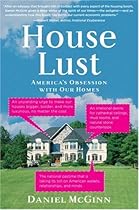
House lust has become as American as apple pie, says Daniel McGinn, a Boston-based national correspondent for Newsweek. He ought to know. He wrote the book on the subject: "House Lust: America's Obsession With Our Homes" (Random House, $24.95).

McGinn's research indicates house lust gets some of the blame for the last housing boom-to-bust cycle because the distinctly-American addiction caused many buyers to overdose on more house than they could afford. Easy mortgage money made it affordable to carry a monkey on your back.

McGinn says instead of taking the pragmatic roof-over-your-head approach to housing, Americans have become emotional infants about shelter. They envy, scheme over, bellyache about and ogle homes they can't have and probably don't need.

Called a "mania for homes" house lust reached fever pitch during the last boom when supersized trophy homes, second, third and fourth homes, household-disrupting renovations, over bidding, and the fascination with real estate Web sites and TV programming reached "obscene" levels, says McGinn.

Even professionals left tenured careers to rush off and join the army of real estate agents.

McGinn, who explores the seven deadly sins of house lust in his book, conducted research during sleep-overs in models homes, at real estate investment seminars and by obtaining his real estate license in a single weekend.

Is the housing bust creating withdrawal symptoms?

No, says McGinn. The possibility of more house lust euphoria trumps any temporary pain caused by the housing crunch.

Here's what McGinn's research uncovered.

• Bigger is better. McGinn spent time with a couple who traded up in a series of houses that started at 2,000 square feet and ended with a $3 million 9,000 square foot McMansion that includes a men's hangout room and twin dishwashers. The couple says their backyard is still too small.

• Virgin homes. McGinn uncovered the "ick factor" a cultural penchant for shiny, new things. People prefer an unsullied new home's smell rather than living in someone else's grit. The penchant helps fuel new home construction.

• Voyeurism. American's have become both virtual and real life looky-loos gathering intel on line from a growing number of data-based real estate web sites and visiting open house events with no intention to buy.

• Money lust. Too many, real estate is money rather than shelter. It's the dot com stock of the New Millennium. In fact, many refugees from the dot com disaster sought financial shelter in real estate. And many of those speculators now feel like they've had a bad weekend at the crap tables in Sin City.

Disclaimer: The writer of this article also has house lust. His dream home is a real, newly built, masonry, commercial loft, with a California ocean view. Yes an unstable structure built on unstable sand in unstable Earthquake Country. It would have to be an engineering marvel. But he has to have it.

Advertise on DeadlineNews.Com

© 2008 DeadlineNews.Com

Broderick Perkins, an award-winning consumer journalist of 30 years, is publisher and executive editor of San Jose, CA-based DeadlineNews.Com, a real estate news and consulting service, and the new Deadline Newsroom, DeadlineNews.Com's new backshop. In both cases, it's where all the news really hits home.


DeadlineNews.Com's Editorial Content Is Intellectual Property • Unauthorized Use Is A Federal Crime


Read more!

Thursday, December 13, 2007

Smart Growth Awards Promote Smart Growth

by Broderick Perkins
© 2007 DeadlineNews.Com

Deadline Newsroom - Smart growth isn't just about cutting back on sprawl and building high-density housing, but includes rebuilding existing communities and engaging its residents.

Take it from Manhattan, which joined Portland, OR; Seattle, WA; Vermont and Barnstable, MA as the nation's smart growth leaders for 2007.

The accolades, the 2007 National Award for Smart Growth Achievement, are granted for innovative community development that protects the environment, preserves community identity and expands economic opportunity.

The Environmental Protection Agency sparingly doles out the awards to promote smart growth strategies, because such efforts help communities enjoy cleaner air and water, open space and critical habitat preservation, and redevelopment of vacant land -- qualities that make for a nice place to live.

Smart growth efforts also preserves community identity and expands economic opportunity.

Winners were selected based on how effectively they used smart growth strategies to improve their communities and how well they engaged citizens and fostered partnerships.

The details are available online on the EPA's Smart Growth Achievement page but here are some highlights revealing why the winning communities are smart growth leaders.

• The award for "Overall Excellence" went to the Housing Authority of Portland, OR. The agency created a public-private partnership to redevelop an isolated and distressed public housing site into New Columbia, where local residents engaged in design workshops and were employed for portions of the construction. The project increased the number of houses, including affordable units and maintained the neighborhood's ethnic diversity.

• For "Built Projects" the Seattle Housing Authority, similarly turned a dilapidated neighborhood into High Point, a mixed-use, mixed-income, and environmentally sensitive community. Using green building principles, High Point's more than 1,700 new units are expected to consume less water, electricity, and natural gas than the old community's 716 units. The new community includes new parks, a public library, and a health clinic. Retail space will come in 2009.

• The Vermont Housing and Conservation Board (VHCB) got the nod for "Policies and Regulations." The independent, state-supported agency, promotes compact settlements surrounded by countryside, pursues affordable housing, land conservation, and historic preservation initiatives. Since 2002, VHCB investments have supported developing more than 3,000 affordable homes, the preservation of 44 historic buildings, and the conservation of more than 37,000 acres of farmland, natural areas, and recreation lands.

• Barnstable, MA created a development strategy for one of its seven villages, Hyannis, to encourage growth and development in the town center and reduce growth pressure on environmentally sensitive areas along the coast to win the "Waterfront and Coastal Communities" award. These policies have resulted in almost 100 new residential units (nine of which are for lower-income households), with nearly 150 more planned; 22,000 square feet of commercial space, with another 100,000 square feet planned; and more than 300 jobs.

• Manhattan shines in the area of "Equitable Development" thanks to its cooperative strategy to expand the housing and commercial options for central Harlem. Work in the Abyssinian Neighborhood Project area, once marked by vacant lots and abandoned buildings, employed comprehensive programs linked education, job training, and cultural enhancement; developed 200 affordable housing units, with an additional 200 planned; and created 15,000 square feet of commercial space for five local businesses. The project also increased access to public transit, created new green space, and minimized storm water runoff by reusing paved surfaces.

• DeadlineNews.Com offers more green news that hits home.

• DeadlineNews.Com offers more global warming news that hits home.

Advertise on DeadlineNews.Com

© 2007 DeadlineNews.Com

Broderick Perkins, an award-winning consumer journalist of 30 years, is publisher and executive editor of San Jose, CA-based DeadlineNews.Com, a real estate news and consulting service, and the new Deadline Newsroom, DeadlineNews.Com's new backshop. In both cases, it's where all the news really hits home.


DeadlineNews.Com's Editorial Content Is Intellectual Property • Unauthorized Use Is A Federal Crime


Read more!

Tuesday, December 4, 2007

The United Metros of America

by Broderick Perkins
© 2007 DeadlineNews.Com

Deadline Newsroom - Just as real estate thrives -- or doesn't -- by location, so does the nation, according to a recently announced blueprint for national prosperity.

The blueprint is designed as a new partnership with federal, state, local, and private sector leaders to strengthen metropolitan economies, build a strong and diverse middle class, and grow the nation in environmentally sustainable ways.

It isn't federal policy or a presidential campaign promise.

It's, well, metro.

And it has a strong housing component.

"We are a full-fledged Metro Nation and need to change our mental map of the United States, from a union of 50 states to a network of 363 highly connected, hyper linked, and economically integrated metropolitan areas," said Bruce Katz, Vice President and Director of Brookings Metropolitan Policy Program recently, when launching the "Blueprint For America Prosperity".

That a think tank, rather than the federal government, is launching such a bold bid to reshape the nation, is itself indicative of the nation's ills.

Brookings says more and more often, large metropolitan areas are at the forefront of social change, quickly addressing housing policies, sprawl, sustainable development, education, immigration, infrastructure, energy independence, technological innovation, global warming and a host of other pressing social concerns.

"Metropolitan areas are vital to national prosperity because they're the engines of the economy. So much of what happens in America happens in metropolitan areas," says Rey Ramsey, Chairman and CEO, One Economy Corporation a non-profit spreading technology and information to low-income people.

Eighty-three percent of Americans live in metropolitan areas, which contain 86 percent of American jobs. The vast majority -- 94 percent -- of people in the nation's 100 largest metros live and work in the same metro.

It's not surprising then, that with such a constituency, metropolitan leaders, not Washington D.C. politicos, are the ones with their fingers on the pulse of innovation and the need for both swift and long-term change.

Unfortunately, dynamic efforts on the metropolitan level are getting short-circuited by out-dated policy and procedural procrastination from a growingly more detached federal government.

Stuck on political partisanship and legislative lethargy, bogged down in war and embroiled in another national election, the slow, plodding federal government is too often ineffectual when it comes to addressing the national penchant for prosperity.

"America's metros find our national government strangely adrift, ignorant of the dynamic changes sweeping the country and the new spatial geography of our economy.

Our federal government is mostly a legacy government, a collection of ossified agencies carrying out decades-old programs and policies, through means and mechanisms suited to a pre-Internet world. As a result, our federal government is out of step with rapid change, and is failing to leverage those assets that drive secure and sustained prosperity," Katz said.

He also characterized current government's housing policies aimed at "the expansion of McMansions at the periphery of metropolitan areas, while failing to address the rapid suburbanization of poor people and employment opportunities."

While the blueprint calls for plans to fully recognize and further tap metropolitan might, it also seeks an upgrade in the federal government to foster a federal-metro partnership to put the nation back on the right track.

"A metro can focus on building its economic strengths, but its economy is profoundly influenced by federal monetary, trade, regulatory and investment practices. A metro can focus on reducing income disparities, but only the federal government can close the gap between wages and the cost of living. A metro area can focus on environmental sustainability, but only the federal government can regulate industries on a national scale," Katz said.

Following the blueprint's introduction, Katz's Brookings crew will begin identifying specific reforms for the next administration and Congress to advance key national priorities including boosting innovation and productivity, replicating the best examples of urban school reform, increasing the supply of workforce housing, improving transportation within and across metros, and making energy efficiency in our homes part of the solution to climate change.

"We are a metro nation. And now it is time to start acting like one," Katz said.

Advertise on DeadlineNews.Com

© 2007 DeadlineNews.Com

Broderick Perkins, an award-winning consumer journalist of 30 years, is publisher and executive editor of San Jose, CA-based DeadlineNews.Com, a real estate news and consulting service, and the new Deadline Newsroom, DeadlineNews.Com's new backshop. In both cases, it's where all the news really hits home.


DeadlineNews.Com's Editorial Content Is Intellectual Property • Unauthorized Use Is A Federal Crime


Read more!

Monday, November 5, 2007

Renters Without Insurance Risk Future Homeownership

by Broderick Perkins
© 2007 DeadlineNews.Com

Deadline Newsroom – Refugees from home ownership now forced to rent could be setting themselves up for another financial disaster if they avoid renter's insurance to pinch pennies in order to quickly save up and return to home ownership.

All renters should have an insurance policy to cover their possessions because, should a disaster hit home, the cost to replace those items will put home ownership that much further out of reach.

But that's not all.

If you are held responsible for an injury to someone in your home or someone's property in your home, without the liability coverage provision of a renter's policy, your current and future earnings could be at risk. You'll also have to foot the bill for any legal defense you could need.

A renter's policy can also put a temporary roof over your head while damage to your rental home is corrected. Policies come with some limits but typically cover the difference between your additional living expenses and your normal living expenses.

Unfortunately, most renters, 58 percent, don't bother to buy renters insurance, according to an Apartments.com survey.

Most of them, more than 70 percent, know better and believe the insurance is important to piece of mind when renting, but say cost is a big reason they forego the coverage.

Apartments.com said 40 percent of those responding to the survey said cost is the reason they decide not to buy the coverage. However, an additional 24 percent of respondents said they were unaware that renters insurance exists.

The Insurance Information Institute reminds renters that because the property owner's policy covers the structure and common area and renters insurance covers only the value of the renter's belongings, renters insurance premiums are relatively cheap.

Shop around.

Apartment.com also found that an additional 18 percent of renters said the value of their personal belongings wasn't enough to warrant coverage.

That's an oversight because renters insurance doesn't just replace property but provides protection from liability claims, loss of use and in some cases, involuntary unemployment insurance in the event of a job loss.

Apartments.com says some management companies and property owners mandate the coverage because of the value provided those covered. Twenty percent of renters said they are required to have a renters policy to live in their current home.

Also, 36 percent of those responding to the survey said they'd be more inclined to rent an apartment with an insurance requirement.

There's a certain value to a community that can retain residents even after events that trigger insurance benefits.

Renters insurance typically provides coverage for possessions lost to fire or smoke, lightning, vandalism, theft, explosion, windstorm and water damage (not including floods). Liability covers your responsibility to other people injured at your home or elsewhere by you, a family member or your pet and it pays legal defense costs if you are taken to court.

Renters can choose between two basic types of policies:

• Actual Cash Value pays to replace possessions minus a deduction for depreciation up to the limit of your policy.

• Replacement Cost pays the actual cost of replacing your possessions (no deduction for depreciation) up to the limit of your policy.

Floaters are also available to boost limited standard policy coverage, especially for items such as jewelry, silver, furs, collectibles, and some computer equipment and work-at-home related items. Floaters also cover perils not included in your policy such as accidental loss, according to the insurance institute.

• Renters Get A Breather
• Rents Inflated By Owner-Occupied Slowdown

© 2007 DeadlineNews.Com

Broderick Perkins, an award-winning consumer journalist of 30 years, is publisher and executive editor of San Jose, CA-based DeadlineNews.Com, a real estate news and consulting service, and the new Deadline Newsroom, DeadlineNews.Com's new backshop. In both cases, it's where all the news really hits home.


DeadlineNews.Com's Editorial Content Is Intellectual Property • Unauthorized Use Is A Federal Crime


Read more!

Monday, October 8, 2007

Off-The-Shelf IKEA Homes

by Broderick Perkins
© 2007 DeadlineNews.Com

Deadline Newsroom – IKEA is doing for Scandinavia and Northern England, what Home Depot is doing for America's Gulf Coast region -- offering affordable "kit homes" off the shelf.

Housing affordability issues differ depending upon which side of The Pond you call home, but in both cases the technology used and marketing efforts employed are quite similar.

And, while hearkening back to the era of Sears catalog home sales, the two new efforts offer hope for more affordable specialized housing.

Leiden, The Netherlands-based IKEA, through its BoKlok (pronounced "boo clook") venture with Solna, Sweden-based real estate developer Skanska, is taking its signature, flatpacked, build-it-yourself home furnishings to new levels -- as high as a two-story home.

Materials for the first factory-built, timber-framed homes shipped in "flatpacks" (a method of bundling materials) sold in the United Kingdom recently went on sale at an IKEA store near Gateshead International Stadium.

The first batch of homes purchased are specifically slated for construction in Newcastle-based Live Smart @ Home's development in nearby Gateshead, Tyne and Wear County in northeastern England.

With samples much like prefabricated or modular homes built in the United States, but with more of the minimalist Scandinavian design of IKEA, the one- to three-bedroom homes are manufactured with a heavily-insulated, energy-efficient, closed-panel system wooden flooring, a choice of roofing materials, furnished kitchens, are designed with a flexible open layout, high ceilings and large windows and come with free IKEA interior design advice and a furniture voucher.

The homes are sold for £90,000 (approximately $185,000) for a one-bedroom home, to £160,000 (approximately $327,000) for a three-bed room house, including construction, and are specifically earmarked for first-time home buyers. Recent reports say one in four young working English households can't afford the cheapest homes.

IKEA home buyers won't have to come up with super-sized Allen wrenches or find storage for left over extra-large wooden connector pegs. Live Smart @ Home is charged with professionally erecting the homes to code in the Gateshead development and is also responsible for having them thoroughly inspected before owners move in. The homes will be constructed in groups of pods of two or four or more homes, rather than as single-family homes.

The housing has already gotten a stamp of approval from England's northern neighbors. Some 800 of all 1,000 BoKlok homes that go up every year are constructed in Sweden, the largest and original market for the properties beginning a decade ago. The concept was introduced in Finland in 2002, Norway in 2003 and Denmark in 2004. Some 500 flatpack homes a year are slated for England.

IKEA homes aren't coming to America in the near future but the Katrina Cottage, a similar venture has already arrived.

Big box warehouse, Lowe's Companies Inc., this summer expanded to the Internet sales of blueprints and materials for the Katrina Cottage, named for the home-wrecking hurricane that prompted it's development.

Along with Internet sales, all Lowe's stores offer the homes in 11 floor plans ranging from a two-bedroom 544 square foot models with a front porch, to a five-bedroom, two-story, 1,807 square foot unit.

The Katrina Cottage was designed and developed by New York architect Marianne Cusato of Cusato Cottages, LLC, as a more aesthetically appealing and durable housing alternative to those grim-looking Federal Emergency Management Agency trailers (FEMA Trailers).

The Katrina Cottage is designed to withstand heavy rain and winds up to 140 miles per hour, they also meet hurricane codes for wind resistance and the International Building Code. Materials-only packages, starting at about $30,000, include all materials necessary to build the cottage from the foundation plate up -- studs, framing, insulation, moisture- and mold-resistant drywall, rot- and termite-resistant siding, fixtures, electrical, plumbing, 25-year warranted metal roofing, even appliances.

Because the homes are single-family detached rather than placed in a development, as in Gateshead, the home owner will have to supply land, a foundation, an HVAC system (heating, ventilation, and air conditioning) and, of course, their own furnishings.

Lowe's says its product is a "materials package" rather than a "kit" shipped all at once. Materials are shipped to include, say, lumber and hardware in one shipment, lighting, plumbing and other fixtures in another, flooring and appliances in still another and so on.

Material packages generally require a professional contractor or highly skilled do-it-yourselfer to assemble the home in six to eight weeks.

Some affordable housing experts consider the Katrina Cottage, the IKEA-BoKlok homes and others like them, destined to fill affordable home gaps elsewhere, much as did Sear's popular mail order "kit homes" program.

Officially called "Modern Homes", the print catalogue-based program delivered 100,000 home-building kits to thousands of empty lots from 1908-1940.

Some of the early Sear's kit homes cost a fraction of the $700 it costs today just to buy blueprints for the Katrina Cottage.

For example, In 1908, the 1,300 square foot, three-bedroom Greenview started at $443! In the good old days of housing, one Sear's home was originally "listed" at $107!

© 2007 DeadlineNews.Com

Broderick Perkins, an award-winning consumer journalist of 30 years, is publisher and executive editor of San Jose, CA-based DeadlineNews.Com, a real estate news and consulting service, and the new Deadline Newsroom, DeadlineNews.Com's new backshop. In both cases, it's where all the news really hits home.


DeadlineNews.Com's Editorial Content Is Intellectual Property - Unauthorized Use Is A Federal Crime


Read more!