Showing posts with label ID theft. Show all posts

Saturday, October 31, 2009

ID theft can bring you to tears

susan
Alleged 'sex-for-Phillies tickets'
spawns latest virtual celebrity
More than 50 percent of those surveyed about ID-theft concerns said their greatest concerns would be associated with the personal side of being victimized, leaving them uncertain, insecure and fearful.

by Broderick Perkins
© 2008 DeadlineNews.Com
Enter The Deadline Newsroom
Unauthorized use of this story is a copyright violation -- a federal crime

Deadline Newsroom - It's not just about losing money to identity theft.

And it's more than the time-is-money spent recovering from the ordeal.

ID theft is also emotionally trying.

When the National Foundation for Credit Counseling (NFCC) asked Harris International to query consumers about ID theft, the related costs and time topped the list of concerns.

However, the vast majority also said the ordeal would leave them uncertain, insecure and fearful.

The survey found 73 percent were concerned about losing money and 69 percent would fret over spending time to resolve the issue (69 percent), but more than 50 percent said their greatest concerns would be associated with the personal side of being victimized.

• Among adult consumers, 75 percent said their greatest concern would be not knowing who has their personal information.

• Also, 65 percent said their greatest concern would be becoming a victim of ID theft again.

• And 56 percent said knowing that the thief knew where they lived would be one of their greatest concerns.

"Identity theft victimization violates consumers on many levels," said Gail Cunningham, spokeswoman for the NFCC.

"Whereas people previously may have focused on the inconvenience and financial side of recovery, we now know that consumers also associate great personal insecurity with this crime," she added.

To feel better, get over to the NFCC-sponsored ProtectYourIDNow.org (or the Spanish-language version and take advantage of information you can use to protect yourself before, and if it comes to it, after ID theft.

The sites include ID theft prevention tips, informational videos, an interactive quiz to assess your risk of identity theft, and resources for victims.

There's also a blog hosted by ID theft expert Robert Siciliano who provides weekly entries with additional insight, information and advice.


• Click on the keywords below for more stories on this subject.

© 2008 DeadlineNews.Com


Advertise on DeadlineNews.Com | Shop DeadlineNews.Com

Get "News that really hits home!" for your Web site or blog from the DeadlineNewsGroup.Com.

You are reading a sample of "News that really hits home!", now available from several beats and published in a growing number of locations.

Broderick Perkins, an award-winning consumer journalist, parlayed 30 years of old-school journalism into a digital real estate news service, the San Jose, CA-based DeadlineNews Group, including DeadlineNews.Com, a real estate news and consulting service and Web site, and the Deadline Newsroom, DeadlineNews.Com's news back shop.

Perkins is also the first Examiner to cover three beats for the Examiner.com news service:
• National Offbeat News Examiner
• National Consumer News Examiner
• National Real Estate Examiner


DeadlineNews.Com's Editorial Content Is Intellectual Property • Unauthorized Use Is A Federal Crime


Read more!

Friday, April 10, 2009

Federal mortgage fraud crackdown follows projected 300 percent increase in mortgage fraud

The feds are out to get outlaw mortgage modification mavericks and foreclosure frauds as home loan rip-offs remain as easy a con as ever, even in hard times. Here's the skinny for consumers looking to avoid getting themselves and their homes taken.

• Get the full story on the Mortgage Modification Maze. Also see Deadline Newsroom's exhaustive coverage of Mortgage Fraud.

by Broderick Perkins
© 2008 DeadlineNews.Com

Enter The Deadline Newsroom

Unauthorized use of this story is a copyright violation -- a federal crime

Deadline Newsroom - Apparently, even in hard times, mortgage fraud remains an easy con.

The number of Suspicious Activity Reports (SARs) for mortgage fraud tracked by the Federal Bureau of Investigation could skyrocket by nearly 300 percent this year.

Compared to 2007, mortgage fraud SARs in 2008 had already increased by more than 36 percent to 63,000. But just two months into 2009, the FBI has already documented nearly 29,000 mortgage fraud SARs. At that rate, some 174,000 SARs -- a 276 percent increase -- could be filed by the end of the year.

And that's only what the FBI can see.

"Many mortgage finance-related entities are either loosely or completely unregulated at the state or federal level," said FBI Director Robert Mueller in recent testimony before the U.S. Senate Appropriations panel.

The good news?

"The current financial crisis has produced an unexpected consequence. They have helped reveal numerous mortgage fraud schemes, Ponzi schemes, and investment frauds, such as the Bernard Madoff scam," Mueller testified.

But while the Feds are catching up with Wall Street crooks, struggling homeowners on Main Street remain common prey. Despite tougher lending standards putting the kibosh on some types of home loan scams, organized wise guys continue to traffic in mortgage fraud.

That's prompted the U.S. Department of the Treasury, the U.S. Department of Justice (DOJ), the Department of Housing and Urban Development (HUD), the Federal Trade Commission (FTC), and the Attorney General of Illinois to launch new initiatives to pump up fraud investigations and step up enforcement actions, especially to protect homeowners seeking relief from President Obama's Making Homes Affordable initiative.

The effort particularly targets loan modification and mortgage fraud.

• Get the full story on the Mortgage Modification Maze Also see Deadline Newsroom's exhaustive coverage of Mortgage Fraud.

Mortgage fraud, a relatively new form of organized crime, first cashed in on the greed that came with the boom market, when some buyers would do anything to own a home -- including lie on the application. Cons, often insiders, also falsified documents, inflated appraisals and used other underhanded techniques to get home loans approved and properties flipped for a hefty profit when appreciation was skyrocketing.

With the housing market bust, however, came stricter underwriting scrutiny which helped stem the tide of loans approved with fabricated information.

Now, mortgage fraud is taking advantage of vulnerable, gullible homeowners facing foreclosure. Like those who once fibbed to cash in on the booming market, many struggling homeowners are likewise willing to do anything to remain homeowners.

Mueller said today's host of sophisticated scams are associated with new loan modification services, foreclosure bailouts, equity grabs, bankruptcy, identity theft and property flipping, among others.

Bruce Hahn, president of the American Homeowners Foundation, a non-profit advocacy group in Washington, D.C. says it's tough to tell the good guys from the bad.

"Some loan modification services are competent, but some are incompetent and there is another group of people who post ads to help with mortgage problems, but are basically fraudsters and fronts," Hahn said.

The FTC recently surveyed online and print advertising for mortgage foreclosure rescue operations nationwide and identified approximately 71 distinct companies running suspicious ads.

It's clear homeowners, who want to avoid being taken by the new scammers must likewise become more sophisticated.

• Get the full story on the Mortgage Modification Maze Also see Deadline Newsroom's exhaustive coverage of Mortgage Fraud.

The experts advise:

• Don't be a rube. If it sounds too good to be true -- it probably is. Debts, bad credit and other financial holes didn't appear over night. They won't magically disappear over night.

"A fair number of homeowners have actually paid someone money before they see us. They see us because they paid and the company didn't do anything for them," said Martin Eichner, director of housing counseling services at the Sunnyvale, CA office of Project Sentinel.

• Be wary of strangers and unsolicited contacts, as well as high-pressure sales techniques. Avoid spam come-ons and web-based advertisements promoting the elimination of mortgage loans for an up-front fee to prepare documents to satisfy the debt. Beware of offers to "save" you from defaulting on loan payments or from foreclosure.

"The most outrageous of these schemes are offers to take your mortgage payment and hold them for you in a trust account. That is a total rip off. Never give your mortgage payment to any third party," Eichner said.

• Attempts to cajole you into making false statements in the name of mortgage relief is a red flag. Likewise don't sign blank documents or those you don't understand.

• Seek out family, friends, co-workers and others you trust who recently successfully solved a mortgage problem. Ask them for referrals. That applies to loan modifications, work outs, restructuring and refinance efforts.

"I would say contact a U.S. Department of Housing and Urban Development, but you can't just say that. We can't help everybody who needs help (because of overwhelming demand). If you hire a for-profit service you should be paying money only if (and after) they are successful. If they are an attorney, contact the state bar. For mortgage brokers (and real estate agents) check with the California Department of Real Estate.

Hahn also says to contact city and county housing offices for assistance and referrals and the latest information on legal, government-sponsored assistance.

Get the full story on the Mortgage Modification Maze for more help avoiding the scams.

Also see Deadline Newsroom's exhaustive coverage of Mortgage Fraud.


© 2008 DeadlineNews.Com

Need a break from doom and gloom in the housing market? Get off the beaten news track and stop by the DeadlineNews Group's Offbeat News Examiner outlet for a few laughs.

Advertise on DeadlineNews.Com

Shop DeadlineNews.Com

Get news that really hits home for your Web site or blog from DeadlineNews.Com.

Broderick Perkins, an award-winning consumer journalist, parlayed 30 years of old-school journalism into a digital real estate news service, the San Jose, CA-based DeadlineNews Group, including DeadlineNews.Com, a real estate news and consulting service and Web site, and the Deadline Newsroom, DeadlineNews.Com's news back shop. Perkins is also a National Real Estate Examiner. All the news that really hits home from three locations -- that's location, location, location!


DeadlineNews.Com's Editorial Content Is Intellectual Property • Unauthorized Use Is A Federal Crime


Read more!

Monday, September 22, 2008

Deadline Newsroom FAQ 92208

When you have questions needing answers that really hit home, contact the Deadline Newsroom. This installment: ID-theft/credit monitoring; solar contractors; disclosing defects.

by Broderick Perkins
© 2008 DeadlineNews.Com
Enter The Deadline Newsroom

Unauthorized use of this story is a copyright violation -- a federal crime.


Deadline Newsroom - Q: I'm concerned about identity theft. Should I buy a credit monitoring service?

A: Only if you are too busy to take no-cost steps to do it yourself. Everyone should be concerned about identity theft, which happens when someone pilfers your personal information to masquerade as you to make purchases, withdraw cash or open accounts in your name.

Credit monitoring services help you quickly spot evidence of ID-theft by keeping tabs on your credit report for suspicious activity. The services charge you $50 to $100 a year, but Consumer Reports calls the services "overrated, oversold, and overpriced."

That's because federal law allows you to do-it-yourself by getting your credit report from each major credit reporting agency -- Equifax, Experian and TransUnion -- every year. That means, if you spread out the freebie access and obtain one report from a different agency every four months, you've effectively set up your own credit monitoring service. The federally sanctioned freebie is at AnnualCreditReport.com. Avoid similar-sounding Web sites.

Also, under a recent class-action settlement anyone with a credit card account from January 1987 to May 2008 is eligible for free credit monitoring benefits and other related services from TransUnion.

A recent data loss case also resulted in free credit report monitoring services for certain Bank of New York Mellon customers.

Even without free credit monitoring services, consumers who want to keep closer tabs on their information than what's provided by a free credit report every four months can turn to online banking, investment and financial account services that permit daily looks at activity on their accounts. Check with your financial institution for details.


Q: How can I find a competent contractor to install solar panels on my home?

A: Start with local, regional, state and then federal solar incentive programs offering tax and cash back incentives. They typically point to qualifying contractors or contractors affiliated and approved by the programs. In California, designated solar contractors are licensed by the Contractors State Licensing Board, specifically to perform solar energy work and other building or construction work necessary to install an active solar system. A California database; a national database of state incentive programs; and the federal U.S. Energy Department all also offer reference resources.

Q: My real estate agent says I have to disclose defects in my home for sale. But won't that turn off prospective buyers?

A: Maybe, but if you don't, your eventual buyer could sue you for not disclosing known defects that could affect the value or salability of your home. It's the law. Competent real estate professionals have a saying about uncertainty over what to disclose -- "If you can't figure it out, don't leave it out. Disclose. Disclose. Disclose." You can't and you don't have to disclose information you aren't aware of, but it behooves you to disclose to potential buyers everything from access via easements to zoo noise. You local real estate association or agent can give you all the disclosure requirements for your area.

Got questions? Send them to news@deadlinenews.com. We'll do our best to get you the most relevant answer.
© 2008 DeadlineNews.Com

Advertise on DeadlineNews.Com

Get news that really hits home for your Web site or blog from DeadlineNews.Com.

Broderick Perkins, an award-winning consumer journalist of 30 years, is publisher and executive editor of San Jose, CA-based DeadlineNews Group -- DeadlineNews.Com, a real estate news and consulting service and Web site and the new Deadline Newsroom, DeadlineNews.Com's news back shop. In both cases, it's news that really hits home!


DeadlineNews.Com's Editorial Content Is Intellectual Property • Unauthorized Use Is A Federal Crime


Read more!

Thursday, June 19, 2008

FBI's 'Malicious Mortgage' Operation Busts Hundreds

Two senior managers of failed Bear Sterns hedge funds were also indicted in a separate mortgage-related securities fraud case.

by Broderick Perkins
© 2008 DeadlineNews.Com


Deadline Newsroom - The Department of Justice (DOJ) and Federal Bureau of Investigation (FBI) on June 19, 2008, announced a national sweep of 144 mortgage fraud operations and the arrests of 406 alleged perps.

Mortgage frauds employ a variety of tactics including misrepresentations, deceit and other criminal abuses to fund, purchase or insure mortgage loans.

Mortgage fraud has become a staple in today's organized crime circles. The FBI says known crime syndicates and other recognized organized criminal operations are not currently associated with mortgage fraud, but the crime does come with the hallmarks of what is considered organized crime -- collusion, conspiracy, insider cooperation and lately, identity theft, one of the newest growth sectors in organized crime recognized by the FBI.

Mortgage fraud is federal felony, punishable by up to 30 years in federal prison or $1,000,000 fine, or both. It is illegal for anyone to make any false statement regarding income, assets, debt, or matters of identification, or to willfully overvalue any land or property, in a loan and credit application for the purpose of influencing in any way the action of a financial institution.

The arrests, part of Operation Malicious Mortgage, were conducted from March 1 to June 18, to address three types of mortgage schemes.

• Lending fraud. Lending fraud frequently involves multiple loan transactions constructed with gross fraudulent misrepresentations about the borrower's financial status, such as overstating the borrower's income or assets, using false or fictitious employment records or inflating property values.

• Foreclosure rescue. Foreclosure rescue scams involve criminals who target legitimate homeowners in dire financial circumstances and fraudulently collect fees for foreclosure prevention services or use fraud to obtain ownership interests in residential properties.

• Bankruptcy. Both of the above fraudulent mortgage schemes may be furthered by filing bankruptcy petitions that automatically stay foreclosure.

The FBI estimates that approximately $1 billion in losses were inflicted by the mortgage fraud schemes employed in the recent busts.

In a separate case, the U.S. Attorney's Office for the Eastern District of New York indicted two senior managers of failed Bear Stearns hedge funds, charging Ralph Cioffi and Matthew Tannin with conspiracy, securities fraud and wire fraud. Cioffi was also charged with insider trading.

The indictment alleges that the duo marketed two funds as a low risk strategy, backed by a pool of debt securities, including mortgages. The indictment also alleges that by March 2007, the managers believed the funds were in grave condition and at risk of collapse, but allegedly didn't disclose that information to investors. The funds collapsed in the summer of 2007 resulting in approximately $1.4 billion in losses to investors.

"Mortgage fraud and related securities fraud pose a significant threat to our economy, to the stability of our nation's housing market and to the peace of mind of millions of American homeowners," said Deputy Attorney General Mark R. Filip.

"Operation Malicious Mortgage and our other mortgage-related enforcement actions demonstrate the Justice Department's commitment and determination to combat these criminal schemes, hold their perpetrators accountable and help restore stability and confidence in our housing and credit markets," he added.

The operation represents the joint efforts of the FBI, U.S. Postal Inspection Service (USPS), Internal Revenue Service (IRS) Criminal Investigation Division, U.S. Immigration and Customs Enforcement (ICE), U.S. Secret Service (USSS), U.S. Trustee Program, Department of Housing and Urban Development (HUD) Office of the Inspector General, Department of Veterans Affairs (VA) Office of the Inspector General, and Federal Deposit Insurance Corporation (FDIC) Office of the Inspector General.

Operation Malicious Mortgage is the most recent coordinated sweep in an ongoing law enforcement effort to combat mortgage fraud, which also included Operation Continued Action in 2004 and Operation Quick Flip in 2005.

Since July 2002, the DOJ has obtained nearly 1,300 corporate fraud convictions, including the convictions of more than 200 chief executive officers and corporate presidents, more than 120 corporate vice presidents and more than 50 chief financial officers.

© 2008 DeadlineNews.Com

Advertise on DeadlineNews.Com

Get news that really hits home for your Web site or blog from DeadlineNews.Com.

Broderick Perkins, an award-winning consumer journalist of 30 years, is publisher and executive editor of San Jose, CA-based DeadlineNews.Com, a real estate news and consulting service, and the new Deadline Newsroom, DeadlineNews.Com's new backshop. In both cases, it's where all the news really hits home.


DeadlineNews.Com's Editorial Content Is Intellectual Property • Unauthorized Use Is A Federal Crime


Read more!

Thursday, May 22, 2008

ID Theft Hits Home

A new breed of ID-thief wants to heist your home (literally), because they know it's likely your most valuable asset. Here's how to keep the swindlers from wrecking your home ownership.

by Broderick Perkins
© 2008 DeadlineNews.Com

More ID theft news that really hits home.

Deadline Newsroom - A growing number of crooks who steal your identity don't swipe your personal information to pilfer from your financial accounts.

They want to get their hands on your home and snatch it right out from under you.

Modern day malefactors are mindful of the fact that while you may have quite a stash to swipe from your savings, credit and investment accounts, chances are your home is your most valuable asset.

You can, however, protect your home from a heist by taking measured preventative steps.

The Federal Bureau of Investigations recently reported the new scourge of "house stealing", a marriage between mortgage fraud and identity theft (ID theft), both of which are now staples of organized criminal activity.

Here's the basic house stealing scam:

• A grifter chooses a house and assumes the identity of the homeowner, often using the Internet to obtain personal information. The information is used to create fake identification papers.

• The culprit then transfers the deed into his or her name using forged documents, signatures and fake identification, but by filing the paperwork with the proper authorities. Now they "own" the home.

• In one variation, the house thief steals the home and then sells it to pocket the profits -- even if someone still lives there. In another variation, crooks prey on homeowners in financial trouble. They promise to refinance the mortgage, but instead "buy" the home using fake identities.

Sai Huda, CEO of San Diego, CA-based Compliance Coach recently deployed CompliancePal the first-of-its kind software clients use to meet federal requirements to weed out ID theft "red flags" -- indicators that identity filching could be afoot.

Huda said the software has found other variations on the house stealing scheme including a team posing as both the owner selling the property and the buyer making the purchase. The real homeowner is left in the lurch.

He developed the software to help federally regulated institutions comply with the so-called "Red Flag" provision of the Fair and Accurate Credit Transactions Act of 2003 (FACTA). Fully effective in November this year, the provision requires that financial institutions, creditors and others who handle your personal identifying documents develop and deploy an ID theft prevention program.

The federal provision comes with more than two dozen red flags regulated companies must heed.

"If businesses fail to comply it's not only civil monetary penalties, it's also violations of federal and state unfair and deceptive acts laws. It's a serious risk for Realtors, mortgage brokers, lenders and others who don't comply," Huda said.

But Huda's software has found nearly as many additional red flags beyond the federal regulations and he says that indicates consumers also have their work cut out for them.

"Consumers need to ask, 'Who am I doing business with? What are they doing to protect me? What am I doing to protect myself?' " he added.

To prevent someone from stealing your home, take conventional ID-theft prevention measures with a focus on protecting your home's ownership.

• Review your credit report frequently. You can do so three times a year for free at the one and only federally-sanctioned AnnualCreditReport.com by getting one report, in turn, every four months from each of the three major credit reporting agencies -- Equifax, Experian and Transunion. Avoid sound-alike services.

• "Just as you keep tabs on your credit report, keep a watch once or twice a year on your home's title records," says Huda. You don't need to hire a title company for a title search, but it's a smart move to visit your county recorder or other public recording agency to check your title for lien changes or additions, requests for information or other anomalies.

• Question all real estate professionals who work on your home transaction about their experience, how they handle your private information and check their license or certification status for complaints or other issues.

• Invest in a confetti shredder to destroy identifying documents before tossing them. Better yet, rub out the paper trail and move financial transactions online. Conduct as much digital banking as possible. The online account gives you 24 hour access to inspect your accounts as often as you wish.

• When you are away, put a stop on all mail and deliveries rather than have someone pick them up.

• Use a safe or safety deposit box for any important documents paperwork you must retain.

© 2008 DeadlineNews.Com

Advertise on DeadlineNews.Com

Get news that really hits home for your Web site or blog from DeadlineNews.Com.

Broderick Perkins, an award-winning consumer journalist of 30 years, is publisher and executive editor of San Jose, CA-based DeadlineNews.Com, a real estate news and consulting service, and the new Deadline Newsroom, DeadlineNews.Com's new backshop. In both cases, it's where all the news really hits home.


DeadlineNews.Com's Editorial Content Is Intellectual Property • Unauthorized Use Is A Federal Crime


Read more!

Wednesday, April 30, 2008

Mortgage Fraud Now Organized Crime Staple

Once the domain of home buying and home equity rip-offs, mortgage fraud is muscling in on foreclosures, reverses mortgages and insider trading related to mortgage securities. Here's how not to get taken.

by Broderick Perkins
© 2008 DeadlineNews.Com

Deadline Newsroom - Mortgage fraud has become a staple in today's organized crime circles.

Fraud associated with home loans first cashed in on the greed that came with the previously booming housing market, when some buyers would do anything to own a home.

The cons used falsified applications, inflated appraisals and other techniques to get home loans approved on the home buying end.

Now, mortgage fraud is taking advantage of vulnerabilities that come with the housing market's down cycle, including homeowners, down on their luck, who face losing their homes and would do anything to avoid losing their homes.

It's a real racket.

FBI Director Robert Mueller recently testified before the U.S. Senate Appropriations panel that the "tremendous surge" in mortgage fraud investigations has been so great he has diverted agents and resources from other areas of white collar crime.

Suspicious activity reports the FBI reviews for potential mortgage fraud have grown from 3,000 in fiscal year 2003 to 48,000 in fiscal year 2007. In 2008, the FBI is on track to receive more than 60,000 such reports.

The subprime crisis will only aggravate matters, Mueller testified.

"I'm not sure at this point we can see the extent of the surge," he added.

Fraud that once primarily used inflated appraisals, "flipping" schemes and identity theft ruses to target home buying and home equity growth is now muscling in on foreclosures, reverses mortgages and subprime loans.

The FBI says known organized crime syndicates, terrorists and recognized political activists are not currently associated with mortgage fraud, but the crime does come with the hallmarks of what is considered organized crime -- collusion, conspiracy, insider cooperation and now, identity theft, one of the newest growth sectors in organized crime recognized by the FBI.

"We are investigating more than 1,300 individual mortgage fraud matters. Perhaps more importantly, we have identified 19 corporate fraud matters related to the subprime lending crisis -- cases that may have a substantial impact on the marketplace," he said.

The racketeers are also using insider trading violations connected to risky loans and the investments spun off of those loans.

On the consumer level, one of the latest cons is a bold one called "House Stealing". A con artist assumes the identity of a homeowner and transfers the deed into the con's name or sells the home outright -- even while the owner is still living there.

A variation on House Stealing includes the con artist preying on homeowners having mortgage troubles. The con promises to refinance the mortgage, but instead buys the home using a fake identity.

Mortgage fraud hotspots include California, Texas, Arizona, Florida, Ohio, Michigan, and Utah.

Now that mortgage fraud is considered a staple in organized crime circles, how can you avoid getting caught in the web of crime?

• Don't be a rube. If it sounds too good to be true -- it probably is. Debts, bad credit and other financial holes didn't appear over night. They won't magically disappear over night.

• Be wary of strangers and unsolicited contacts, as well as high-pressure sales techniques. Avoid spam come-ons and web-based advertisements promoting the elimination of mortgage loans and credit card and other debts for an up-front fee to prepare documents to satisfy the debt. Beware of offers to "save" you from defaulting on loan payments or from foreclosure. Beware of zero-down loans and falsely altered information to qualify you for a loan. Don't borrow money you can't afford to repay.

• Don't be cajoled into making false statements on loan applications including overstating your income, the source of your down payment or the nature and length of your employment.

• Ask family, friends, co-workers and others you trust who also recently completed a satisfactory mortgage, for referrals to mortgage and other real estate professionals. That applies to loan modifications, work outs and "restructuring."

• Always shop for a lender by comparing all costs and terms. Don't be sucked in by lenders who tell you they are your last chance at home ownership.

• Don't sign blank documents, documents containing blank sections or documents you don't understand. Get help from trusted individuals to go over the terms of the deal.

• Examine for accuracy recent comparable sales, tax assessments and other documents that offer evidence of a home's true value.

• Review a property's title history to determine if the property has been sold multiple times recently and within a short period. That could be evidence the property has been "flipped" which can cause artificial value inflation.

• Do your home work and research home prices in the neighborhood before beginning the leg work of home buying.

• Obtain credit and financial counseling, attend home buying classes, seminars or workshops and otherwise bone up on your home buying education before taking the plunge.

• More on real estate industry fraud.

© 2008 DeadlineNews.Com

Advertise on DeadlineNews.Com

Get news that really hits home for your Web site or blog from DeadlineNews.Com.

Broderick Perkins, an award-winning consumer journalist of 30 years, is publisher and executive editor of San Jose, CA-based DeadlineNews.Com, a real estate news and consulting service, and the new Deadline Newsroom, DeadlineNews.Com's new backshop. In both cases, it's where all the news really hits home.


DeadlineNews.Com's Editorial Content Is Intellectual Property • Unauthorized Use Is A Federal Crime


Read more!

Wednesday, February 13, 2008

How To Stop ID Theft, Cold

Consumers are proving they can turn back time on identity theft by following a prescribed program of diligent document protection and criminal deterrence.

by Broderick Perkins
© 2008 DeadlineNews.Com

Deadline Newsroom - A well-measured program of preventive steps can protect your identity from theft.

ID theft-related fraud fell by 12 percent in 2007 and 300,000 fewer adults were victims, according to the latest from Javelin Strategy & Research, the longest-running ID theft study in the nation.

At the top of the list of reasons for the decline is "greater consumer vigilance and awareness," according to the report.

When someone steals your identity, you don't wander around aimlessly like some John or Jane Doe. Someone pilfers enough of your personal identifying information --name, address, Social Security Number, drivers license, credit and financial account numbers and the like -- then masquerades as you to make purchases, withdraw cash or otherwise undermine your financial assets and your name.

ID theft can cost you time and money (averaging $691, according to the report) to correct the misdeed and it can ruin your credit enough to prevent you from making major purchases including buying a home.

Companies that manage personal information have improved their ID theft protection measures, but consumers who protect their own personal information is the first line of defense.

Here's what Javelin suggests.

• Move your financial transactions online by turning off paper invoices, statements and checks, including paychecks, and replacing them with electronic versions where offered by employers, banks, utilities or merchants. Avoid mailing checks to pay bills or deposit funds in your banking account. Instead, pay bills online and use remote deposit check imaging services on online banking sites.

This effort rubs out the paper trail. Crooks are more likely to steal information on paper, from personal belongings and through telephone calls, rather than online.

• Monitor your accounts regularly online at bank and credit card websites. Americans who monitor their accounts online are most likely to uncover suspicious or unauthorized activity early.

• Likewise, review your credit information frequently. You can do so three times a year for free at the federally-sanctioned AnnualCreditReport.com by getting one report, from each of the three major credit reporting agencies -- Equifax, Experian and Transunion -- in turn, every four months.

• Reduce unnecessary access to your personal information wherever possible. For example, don't carry Social Security cards, unused credit cards or checks, and don't leave sensitive documents out in the open.

• Never provide sensitive financial information over the phone or Internet, including Social Security numbers, passwords, PINs or account numbers, unless you placed the call directly to a verified and trusted location, such as the number on back of a credit card or statement.

• Add your name to the federal Do Not Call registry and direct marketing opt-out lists to reduce solicitations that could be bogus.

Even as overall ID theft has fallen, "vishing," criminals using telecommunications, voice over Internet protocol (VoIP) and like methods, is on the rise. That's because, as more consumers shift more transactions to secure online services, thieves are becoming more creative on the telephone claiming to represent non-profit and charitable operations.

In the same vein, wireless phone accounts have become the most frequent types of new accounts opened fraudulently by criminals using stolen data. The trend exceeds that of fraudulent new credit cards, loans, checking or savings accounts.

• Install and regularly update firewall, browser, anti-spyware, and anti-virus security software on your personal computer, and keep operating systems updated. Updates typically come with spyware, virus and other protections.

• Consider placing a credit freeze on your credit report or your child's credit report if you know you won't be using credit for some time. Child ID theft is on the rise because thieves know you and your kid aren't likely to check the child's credit report for some time due to a lack of credit use. Check your state's "credit freeze" law. The cost may be nominal or free. The three credit reporting agencies offer the service for a fee.

• If you are an ID theft victim, report it to the police, affected accounts, and call any one of the three credit bureaus to have a fraud alert placed on your account to prevent future infractions as you sort out the mess. Contact one bureau to place a fraud alert on your credit report and that company is required to notify the other two so that they too can place an alert on their versions of your report.

More ID Theft news that really hits home.

Also see DeadlineNews.Com's ID Theft Archives

Advertise on DeadlineNews.Com

© 2008 DeadlineNews.Com

Broderick Perkins, an award-winning consumer journalist of 30 years, is publisher and executive editor of San Jose, CA-based DeadlineNews.Com, a real estate news and consulting service, and the new Deadline Newsroom, DeadlineNews.Com's new backshop. In both cases, it's where all the news really hits home.


DeadlineNews.Com's Editorial Content Is Intellectual Property • Unauthorized Use Is A Federal Crime


Read more!

Friday, November 16, 2007

Online 'Privacy Policies' Vastly Misunderstood

by Broderick Perkins
© 2007 DeadlineNews.Com

Deadline Newsroom – Follow up the federal Do Not Call registry with a Do Not Track list for those who shop online from home and elsewhere.

That's the appeal from consumer agencies to the Federal Trade Commission after a compilation of several academic studies revealed online "privacy policies" at ecommerce sites are not what users think they are -- often because they don't take the time to read them.

With no Do Not Track service in place as the holiday shopping frenzy ensues in households from coast-to-coast, reading privacy policies is consumers' best bet to learn what happens to their information when they shop online.

As many as 63 percent of Americans incorrectly believe the phrase "privacy policy" on online shopping sites signifies that their information will be kept private, according to "Consumers Fundamentally Misunderstand The Online Advertising Marketplace".

Also, 37 percent of online shoppers falsely believe that a privacy policy prohibits a website from using information to analyze individuals' activities online.

Wrong again.

In fact, "privacy policies" typically explain common ecommerce practices, those perfectly legal information-collection techniques that are the foundation of online advertising business models, according to the report of surveys co-compiled by the University of Pennsylvania Annenberg School for Communication and University of California-Berkeley Samuelson Law, Technology & Public Policy Clinic.

"They assume the website cannot engage in many practices that, in reality, are common in ecommerce. Consumers do not understand the nature and legality of information-collection techniques that form the core of online advertising business models," according to the report.

The report's authors say because incorrect consumer beliefs about privacy policies are so widespread and disconnected, the Feds should step in to better police the term "privacy policy" to make it truer to its perception.

Consumers also believe privacy policies prohibit "enhancement" -- the common practice of collecting data and combining it with information from other sources.

In one survey when consumers were asked "If a website has a privacy policy, it means that the site cannot buy information about you from other sources to analyze your online activities," 39.8 percent answered (incorrectly) true, and 10.8 percent didn't know.

However, when information-gathering techniques -- the process of tracking, extracting and sharing information to make money from advertising -- were explained to consumers, 85 percent overwhelmingly rejected the privacy they give up in exchange for access to content.

When offered a choice to get content from a valued site with such a policy or pay for the site and not have it collect information, 54 percent of adults who go online at home said that they would rather use legwork and search for information offline than exercise either option presented.

The report concludes: "As the Federal Trade Commission revisits privacy issues implicated by behavioral profiling and online advertising, its approach must be informed by the fact that consumers understandably assume that 'privacy policies' create substantive rules limiting collection and use of data. The Commission should police the term 'privacy policy' so that websites and network advertisers have protections in place consistent with reasonable consumer expectations."

Consumers are also responsible for taking steps to keep private information as close to the vest as possible.

• Privacy Rights Clearing House offers insights on the privacy policy issue in "Online Shopping Tips: E-Commerce and You."
• The Federal Trade Commission also offers a guide "Online Shopping & E-Payments."

• Preventing ID Thieves From Stealing Innocence
• Final 'Red Flag' Rules Set To Wave Off ID Theft
• New ID Theft Study Points to Strangers
• Credit Freeze Doesn't Guarantee ID Theft Protection

© 2007 DeadlineNews.Com

Broderick Perkins, an award-winning consumer journalist of 30 years, is publisher and executive editor of San Jose, CA-based DeadlineNews.Com, a real estate news and consulting service, and the new Deadline Newsroom, DeadlineNews.Com's new backshop. In both cases, it's where all the news really hits home.


DeadlineNews.Com's Editorial Content Is Intellectual Property • Unauthorized Use Is A Federal Crime


Read more!

Sunday, November 11, 2007

Preventing ID Thieves From Stealing Innocence

by Broderick Perkins
© 2007 DeadlineNews.Com

Deadline Newsroom – Kids have become easy targets for ID thieves because of exposure offered by popular social networking sites on the Internet. In their naiveté, kids are also too often willing to give out information that can be used fraudulently.

Former Arkansas Treasurer and gubernatorial candidate Jimmie Lou Fisher, now the consumer education instructor for the state's attorney general, is a pioneer in child privacy issues, including the fight against child identity theft.

She says a child's stolen Social Security number, used to open credit, may not be discovered until after the child turns 18 or attempts to open a credit account.

Case in point: In Pensacola, FL, a Girl Scout leader pleaded guilty to stealing her scouts' personal information in a ruse to obtain $87,000 in illegal tax refunds.

The scout leader admitted asking parents to provide their children's Social Security numbers for a medical release the scout leader claimed was required for field trips. The leader used the numbers to file 19 false tax returns, including four using her own kids' Social Security Numbers.

And then there's Zach Friesen who became the poster child for ID theft when at 17 he applied for a job and a school loan and discovered he was in debt for a $40,000 house boat. Someone stole his identity when he was only 7.

Now 21 and a political science major at the University of Colorado, Friesen works for the Qwest Communications' Incredible Internet Program spreading the beware gospel to teens, parents, legislators and others who need to know about child ID theft.

Kids have become easy targets for ID thieves because of exposure offered by popular social networking sites on the Internet. In their naiveté, kids are also too often willing to give out information that can be used fraudulently.

According to the Federal Trade Commission (FTC), 400,000 children have their IDs stolen each year and are perfect targets because they have clean credit histories. The crooks often can get away with the crime for years because kids and their parents seldom if ever check kids' credit reports.

However, kids have the same protections adults can use to protect their identity.

It starts with using free annual access to a kid's credit reports available through the federally-sanctioned Annual Credit Report.com.

Avoid offers from similarly sounding Web sites offering "free" credit reports. They typically come with mandatory fee-based services, say credit report monitoring.

Some child privacy advocates say the Social Security number assigned at birth is enough to trigger the creation of a credit report by one of big three credit reporting agencies, Experian, Equifax and Transunion.

However, many kids won't get a credit report, until, say, a parent's credit card account is used to issue a card in the child's name, a child co-signs for a auto or other loan, or perhaps if an older teen manages to secure a gas, retail or other merchant card. Youth employment, a rental application or other activities that warrant a credit check by a company could also generate an initial credit report.

If a child spends a lot of time online in chat rooms, social networking sites or other information gathering and sharing sites, parents checking for a credit report isn't a bad idea, if only to determine a credit report doesn't exist or that there is no suspicious activity.

The free-credit-report provision of the 2003 Fair and Accurate Credit Transactions Act (FACTA), which amends the Fair Credit Reporting Act (FCRA) gives anyone access to credit reports from the big three credit reporting agencies and others governed by federal regulations.

The provision is not for a single, free credit report a year, but one from each of the three major credit reporting agencies every year. That means parents can check for free three times a year, each time getting a different report from a different agency. Parents may need a birth certificate to prove the identity of a child to check their credit report.

Another tool is a no- or low-cost credit freeze, previously offered by law in three dozen states and now offered for a fee by the three credit reporting agencies.

The freeze placed on a credit report -- via direct contact with each credit bureau -- blocks requests for credit and may be particularly useful for kids who typically don't have a need for credit until they are young adults.

Also, for kids who become ID theft victims and generate a police report, parents can, for free, call any one of the three credit bureaus and have a fraud alert placed on the credit report to prevent future infractions while sorting out the mess. In this instance, contacting just one bureau gets the fraud alert placed on your credit report at each of the three credit reporting bureaus.

For kids in general, Qwest Communications, the FTC, Arkansas' Fisher and others suggest the follow child ID theft prevention measures:

• Insist that kids never provide personal information to strangers on or off line. That includes phone numbers, addresses, age, school, gender, hobbies or interests. Kids should always use a screen name, rather than their real name on social networking sites. Likewise their email address shouldn't include their real name.

Posting personal photos isn't a good idea. Nor is posting photos with identifying info including, say, a t-shirt emblazoned with your high school name or a photo with a your house and home address number in the background.

• Be sure you know who is receiving instant messages you send. Under the supervision of a parent, kids should exchange email addresses in person, rather than online.

• If something inappropriate happens online, kids should report it immediately to parents. Parents can also use CyberTipLine.com and report suspicious activity to the police.

• Kids and adults should always be alert to Internet scams and protect themselves and computers with software that thwarts spyware, spam and viruses.

• Parents should know kids' passwords and screen names. They also should learn Internet lingo such as POS: parent over shoulder.

• Parents should monitor their kids' online activity to be available should a site ask for personal information -- like a last name or address -- to make sure the child doesn't provide the information.

• Parents shouldn't ignore junk mail in a child's name. Parents should react to kids getting credit cards promotions in the mail as a red flag. It's time to pull the kid's credit report.

• Parents should put magazine subscriptions in the parent's name to keep the kids' names off mailing lists.

• Don't let kids carry their Social Security cards or numbers with them -- nor should parents. Keep cards and numbers in a safe place at home.

• Check for an earnings statement for your kids from the Social Security Administration. Unless your child has earned Social Security taxed income, there should be no earning associated with his Social Security number. You can sign up to have an annual Social Security earnings statement sent to you.

• Final 'Red Flag' Rules Set To Wave Off ID Theft
• New ID Theft Study Blames Strangers
• More Related News From DeadlineNews.Com

© 2007 DeadlineNews.Com

Broderick Perkins, an award-winning consumer journalist of 30 years, is publisher and executive editor of San Jose, CA-based DeadlineNews.Com, a real estate news and consulting service, and the new Deadline Newsroom, DeadlineNews.Com's new backshop. In both cases, it's where all the news really hits home.


DeadlineNews.Com's Editorial Content Is Intellectual Property • Unauthorized Use Is A Federal Crime


Read more!

Tuesday, November 6, 2007

Final 'Red Flag' Rules Set To Wave Off ID Theft

Preemptive federal "red flag" regulations, designed to strike at the heart of identity theft in its earliest stages, rolls out this year. (More ID theft news.)

by Broderick Perkins
© 2008 DeadlineNews.Com

Deadline Newsroom – Preemptive federal "red flag" regulations, designed to strike at identity theft in its earliest stages, rolls out this year.

Beginning Jan. 1, 2008, with all federally regulated financial institutions ordered to be in full compliance by Nov. 1, 2008, the so-called "Red Flag" provisions of the Fair and Accurate Credit Transactions Act of 2003 (FACTA), requires that financial institutions and creditors develop and deploy an Identity Theft Prevention Program for combating ID theft on new and existing accounts.

The Red Flag regulations are included in the same massive regulatory overhaul of the Fair Credit Reporting Act (FCRA) that gave consumers free credit reports and a host of additional protections.

Under Red Flag provisions, each institution must develop a program that will

• Identify relevant patterns, practices, and specific forms of activity that are "red flags" signaling possible ID theft.
• Include a mechanism to detect red flags identified by the program.
• Quickly respond to detected red flags in a way to both prevent and mitigate ID theft.
• Be updated regularly to reflect changes in real world risks from ID theft.

If you are the victim of ID theft, you don't actually lose your identity and wander aimlessly like an amnesiac Jane or John Doe.

ID theft occurs when someone steals your personal identifying information and uses it in a crime. With your Social Security number, driver's license number, credit account numbers, passwords or other information in hand, thieves can masquerade as you to access your financial accounts, withdraw cash, make credit purchases, and open additional accounts in your name.

The newest identity theft data reveals greater awareness, new consumer protections and industry actions have already begun to stem the tide of ID theft.

The number of victims of ID thefts decreased from 10.1 million in 2003 to 8.4 million in 2007. From 2006 to 2007, the total amount lost to ID fraud decreased from $55.7 billion to $49.3 billion; per victim losses decreased from $6,278 to $5,720 and resolution hours per victim fell from 40 hours to 25 hours, according to Javelin Strategy & Research's 2007 Identity Fraud Survey Report.

Federal regulatory efforts should take a bigger bite out of the crime.

The final rules especially target the incidence of requests for changes of address followed closely by a request for an additional or replacement card as a common ID theft method of operation to watch. The rules also include an additional two dozen guidelines to help institutions root out other suspicious activity that warrants attention.

The guidelines say actions institutions should be on the lookout for include:

• ID numbers. Use of a single Social Security number or other identifying number used to open accounts under different names.
• Alerts and freezes. ID theft alerts from fraud detection services, customers, law enforcement agencies and others. A credit bureau's notice of credit freeze provided to an institution along with the institution's requested consumer credit report.
• Extra activity. An increase in credit report inquiries or other unusual patterns on a credit report.
• Questionable information. The appearance of doctored or forged documents; inconsistent information or identifying information associated with known fraudulent activity.
• Inconsistencies. A new revolving credit account used in a manner commonly associated with fraud patterns; an account used in a manner not consistent with established patterns of activity on the account; applicants failing to provide all required identifying information and information supplied that is not consistent with existing information on file.
• Mail sent to the customer's on file address repeatedly returned as undeliverable among others.

• Consumers looking for help with ID theft prevention efforts should visit OnGuardOnLine.com, and take the animated "ID Theft Face Off" game-quiz to test ID theft knowledge and play the file sharing "P2P Threeplay" game to get some insight on the associated risk.

The Web site features a host of entertaining, game-like approaches to learning about Internet fraud, computer security, and personal information protection.

• Also visit the Federal Trade Commission's ID Theft Page for details on ID theft protection steps.

• Deadline Newsroom's ID Theft Archives

• DeadlineNews.Com's Consumer Credit Center

© 2008 DeadlineNews.Com

Broderick Perkins, an award-winning consumer journalist of 30 years, is publisher and executive editor of San Jose, CA-based DeadlineNews.Com, a real estate news and consulting service, and the new Deadline Newsroom, DeadlineNews.Com's new backshop. In both cases, it's where all the news really hits home.


DeadlineNews.Com's Editorial Content Is Intellectual Property • Unauthorized Use Is A Federal Crime


Read more!
Tuesday, October 23, 2007

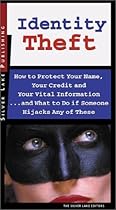
New ID Theft Study Blames Strangers

by Broderick Perkins
© 2007 DeadlineNews.Com

Deadline Newsroom – Don't let a new identity theft study confuse your approach to warding off the crooks. No matter the source of the pilfering, the fundamentals of ID theft prevention apply.

A new study about who is likely to steal your identity shifts the blame from people you know to those who are more likely to be strangers.

In its "Identity Fraud Trends and Patterns," Utica College's Center For Identity Management & Information Protection (CIMIP) tracked Secret Service arrests and convictions of offenders and found that identity thieves engaged in these methods of operation.

• ID thieves used the Internet or some other technological device in the commission of the crime approximately 50 percent of the time. Among those who did not use technology, tactics like dumpster diving and change of address were used 20 percent of the time.

• ID thieves snatched information from service, retail, financial industries or other corporations in 50 percent of the cases in which the point of compromise could be determined. A family member or friend was the point of compromise in only 16 percent of those cases.

• ID thieves used their place of employment to gain access to information 43.8 percent of the time among those who worked at retail outlets including stores, car dealerships, gas stations, casinos, restaurants, hotels, hospitals and doctors' offices. Private corporations were the scene of insider ID theft in about 20 percent of those cases.

The study is in contrast to reports from Javelin Strategy & Research, which has studied the issue from the perspective of victims, rather than the crooks.


"Online Banking and Bill Paying: New Protection from Identity Theft," a study released several years ago by Javelin Strategy and Research, a consultant for financial services, payments, and commerce sector companies, analyzed findings from Federal Trade Commission (FTC) and U. S. Postal Service reports, as well as its own studies.

That study found ID theft stems from a paper trail -- 40 percent of all ID fraud starts with the theft of a wallet or a purse; 14 percent of the time when someone sets up a new account it's done with information the perpetrator took out of a mailbox.

Javelin also said the greatest sources of ID theft are friends and family.

James Van Dyke, responding to the Utica study, said he didn't see a conflict with his firm's results because the Secret Service takes on high-dollar cases -- the median loss in the Utica study was $31,000.

A recent Gartner Inc. survey of victims found the average to be about a tenth as much, $3,300.

Van Dyke also says smaller investigations are handled by local or state police.

When it comes to consumer protection, it doesn't matter how identity theft occurs or who gets fingered at the perpetrator . Consumers are advised to guard all the possible approaches to personal information.

Learn about ID theft prevention strategies outlined on the Federal Trade Commission's Identity Theft Site.

Read Deadlinenews.Com series "Special Report: FACT Act Amends Fair Credit Laws" to learn about protections under the Fair Credit Reporting Act and it's major overhaul, The Fair and Accurate Credit Transactions Act.

Learn more.

Credit Freeze Doesn't Guarantee ID Theft Protection
How To Protect Your Identity -- For Little Or No Cost
Website To See: AARPs Online Identity Theft Seminar
ID Theft Protection Can Give You A False Sense Of Security
Online Banking Stifles Identity Theft

© 2007 DeadlineNews.Com

Broderick Perkins, an award-winning consumer journalist of 30 years, is publisher and executive editor of San Jose, CA-based DeadlineNews.Com, a real estate news and consulting service, and the new Deadline Newsroom, DeadlineNews.Com's new backshop. In both cases, it's where all the news really hits home.


DeadlineNews.Com's Editorial Content Is Intellectual Property • Unauthorized Use Is A Federal Crime


Read more!

Tuesday, October 2, 2007

Mortgage Mistakes Tank NetBank

by Broderick Perkins
© 2007 DeadlineNews.Com

Deadline Newsroom – Alpharetta, GA-based NetBank Inc., the first online bank to tank, in part, because of mortgage market missteps, is also the first federally-insured thrift to go under in the current market because of mortgage issues.

NetBank is also the largest federally-insured bank to go under since the Savings and Loan Crisis cost the nation as much as $500 billion beginning decades ago.

The event raises red flags for consumers of the now-bankrupt institution, many of them mortgage holders. That's because former NetBank customers are likely to be bombarded with misleading spam and phishing -- fraudulent emailed attempts to gain sensitive, private information by masquerading as a legitimate company.

The bank's failure is also a lesson for consumers who plop down more than $100,000 in even a federally-insured bank. Recovering all amounts over $100,000 could be arduous. For that reason, financial planners and advisers frown upon depositing more than the $100,000 insured level in any single bank.

As for the phishing likely to follow, NetBank customers aren't the only ones who could be threatened with identity theft. Phishing operations don't discriminate.

Federal regulators and banks that acquired NetBank assets say they will not email former NetBank customers asking them to validate deposits or otherwise request personal, confidential information, such as account numbers, Social Security Number, driver's license number, and the like.

Regulators and banking officials advise all consumers not respond to such email and to consider it fraudulent. Forward such email, with the full header attached to, spam@uce.gov.

• The FDIC has a toll-free number for customers affected by the failure: 1-888-256-6932.

• Also online locations where customers can get the straight scoop are ING Bank and the FDIC.

© 2007 DeadlineNews.Com

Broderick Perkins, an award-winning consumer journalist of 30 years, is publisher and executive editor of San Jose, CA-based DeadlineNews.Com, a real estate news and consulting service, and the new Deadline Newsroom, DeadlineNews.Com's new backshop. In both cases, it's where all the news really hits home.


DeadlineNews.Com's Editorial Content Is Intellectual Property - Unauthorized Use Is A Federal Crime


Read more!