Showing posts with label preparedness. Show all posts

Thursday, August 25, 2011

How to keep Irene out of your house

Big, blustery Hurricane Irene is barreling up the East Coast and she's got her eye on your home. And when she sits around your house, she sits around your house.

by Broderick Perkins
© 2011 DeadlineNews.Com

Enter The Deadline NewsroomNews that really hits home!
Unauthorized use of this story is a copyright violation -- a federal crime

Deadline Newsroom - Big, blustery Hurricane Irene is barreling up the East Coast and she's got her eye on your home.

And when she sits around your house, she sits around your house.

Kinetic Analysis Corp. expects Irene to cause as much as $13.9 billion in insured losses if she blusters ashore in full force.

The Category 3 storm will be packing rain-lashing winds of more than 100 miles an hour, but the National Weather Service projects, before expected landfall this weekend around North Carolina's Outer Banks, the tropical cyclone could become an even more devastating Category 4 storm pushing winds at more than 130 miles an hour.

Photo: Category 3 Hurricane Irene churns on August 25, 2011 in the Caribbean Sea. Irene is projected to become Category 4 storm with winds more than 131 miles per hour before landfall on the eastern seaboard of the U.S. (Photo by NASA via Getty Images)

A Category 4-level storm (before the Saffir–Simpson Hurricane Scale was developed) that hit the island port city of Galveston, TX in 1900, is the deadliest natural disaster in U.S. history. It killed 8,000 -- one in six residents -- and destroyed most of the buildings in it's path.

Other examples of Category 4 storms include Hazel (1954), Carmen (1974), Iniki (1992), Luis (1995), Iris (2001), Charley (2004). Katrina, which hit the Gulf Shore in 2005 was a Category 5 at its strongest point, followed by Rita, a Category 3.

If you are among the 16 million Americans in the path of the storm and haven't already evacuated -- and you should if you've been so advised -- it's time to batten more than the hatches.

The Federal Emergency Management Agency and other disaster preparedness experts swear by the time-honored phrase "an ounce of prevention is worth a pound of cure" to rally property owners to the practice of mitigation -- preventing damage before it occurs, rather than cleaning up afterward.

While a hurricane comes with a wind blown storm surge that can raise water levels and cause flooding, as in the Katrina storm, you want your home to be as intact as possible after the storm passes.

The key is keeping Irene outside.

"The trick to making a structure extremely wind resistant is to create a continuous connection path from the roof rafters or trusses all the way down to the foundation," says Cincinnati's master contractor Tim Carter of AskTheBuilder.com.

Here's how.

Roofing, walls

FEMA says the broad, flat surface of the home below gable-end roofing makes a home particularly susceptible to high wind damage. If the framing -- rafters or trusses -- isn't braced, winds could blow off the roof and, once inside, blast out the walls.

A professional roof inspection can indicate if your roof needs bracing. Hire only licensed, specialized contractors to do the work -- installing 2-by-4's between the roof rafters or trusses at each end of the house, as well as anchoring accessible roof rafters and trusses to the wall system.

If you have to strengthen interior walls to hold the roof connections, that could mean removing surface covering to get at the framing, says the Natural Hazards Research and Applications Information Center at the University of Colorado.

Windows

Double- or triple-glazed windows not only provide a stronger wind barrier, but add energy-efficient insulation, greater fire protection and noise abatement qualities to your home.

However, even triple-glazed windows that aren't protected can offer easier access to wind borne missiles than permanent storm shutter (not the cosmetic variety) protected windows.

For every $1 invested in wind shutters, at least $5 is saved in mitigated interior damages, according to the Emergency Service Center South, in Dade County, FL.

Protected windows also reduce the risk of roof damage caused by high winds that manage to penetrate the building.

Temporary, less expensive plywood covers are another option you can also use to protect sliding glass doors or large widowed areas. However, don't nail down the plywood, as frantic homeowners are often shown doing during televised news broadcasts of approaching storms.

Fasten plywood panels down with screws or lag bolts long enough to penetrate the wall studs around the window, not just the siding or wall covering.

Doors

For doubled-sided entry doors, add a heavy-duty dead bolt or replace the existing dead bolt with a stronger one. Add sturdy slide bolts at the top and bottom of the inactive door and replace all existing hinge screws with longer screws that extend further into the doors and frame. Likewise, shore up single doors and replace old or damaged ones with stronger ones, FEMA recommends.

Garage doors

The garage door is another broad, weak surface. A skilled do-it-yourself home owner can perform the necessary reinforcement work -- adding girts across the back of the door and strengthening the glider wheel tracks. Also replace old or damaged garage doors with a stronger model. Reinforce it as well. Smaller single-car garage doors resist wind forces better than two-car garage doors and windowless doors are safer because glass is easily broken by high winds and wind blown debris.

Wind-borne missiles

Remove or move trees so they are far enough away from your house that they can't fall on it.

Anchor storage sheds and other outbuildings to a permanent foundation or with straps and ground anchors. Keep your property clear of debris and other items that can become wind-borne missiles.

Visit FEMA's Hurricane page online for more information.

• Click on the keywords below for more stories on this subject.

© 2010 DeadlineNews.Com

Advertise on DeadlineNews.Com | Shop DeadlineNews.Com

Get "News that really hits home!" for your Web site or blog from the DeadlineNewsGroup.Com.

You are reading a sample of "News that really hits home!" now available from several beats and published in a growing number of locations.

Broderick Perkins, an award-winning consumer journalist, parlayed 30 years of old-school journalism into a digital real estate news service, the San Jose, CA-based DeadlineNews Group, including DeadlineNews.Com, a real estate news and consulting service and Web site, and the Deadline Newsroom, DeadlineNews.Com's news back shop.

Under the DeadlineNews Group umbrella:

Perkins was the first Examiner to cover three beats for the Examiner.com news service:
National Real Estate Examiner
National Consumer News Examiner
National Offbeat News Examiner

Other DeadlineNews Group Feeds are available from DeadlineNews.Com.

DeadlineNews.Com's Editorial Content Is Intellectual Property • Unauthorized Use Is A Federal Crime


Read more!

Thursday, July 7, 2011

Homeowner associations' special disaster preparedness needs

Every homeowner needs to prepare for disaster, but those who live in HOA communities have some special disaster preparedness needs related to the shared lifestyle of HOA living -- everyone in the community needs to be aware of and part of the plan, says the National Board of Certification for Community Association Managers

by Broderick Perkins
© 2011 DeadlineNews.Com
Enter The Deadline NewsroomNews that really hits home!
Unauthorized use of this story is a copyright violation -- a federal crime

Deadline Newsroom - If you live in a condo, townhome or other community governed by homeowners association (HOA), take a lesson from Judy Rosen who lives in a 70-unit HOA in St. Louis, MO.

When the "Good Friday-Earth Day" tornado in April this year carved a 22-mile swath of destruction through town, damaging 200 homes and leaving thousands without power, Rosen's community residents were huddled in the community's underground windowless garage.

Luckily, their community wasn't damaged but residents were assured by knowing what to do and where to go because of a disaster preparedness plan already in place.

"I would be just panicked if something happened to the people who live in my community," said Judy Rosen, a community manager with more than 30 years' experience.

"But because I took the time to sit down and write an emergency preparedness plan, I know I had done my job. That prepares me, and that prepares my community, for whatever can happen," Rosen said.

Californians rarely see tornados. but they are no strangers to earthquakes, floods, mudslides, wildfires and other Wild West disasters.

Every homeowner needs to prepare for disaster, but those who live in HOA communities have some special disaster preparedness needs related to the shared lifestyle of HOA living -- everyone in the community needs to be aware of and part of the plan, says the National Board of Certification for Community Association Managers .


According to the American Red Cross, writing a disaster preparedness plan has six steps:

• Commitment. The HOA board, management company and others in leadership roles should become committed to disaster planning. Members can play a role by encouraging leadership to get committed.

• Assessment. Determine what components of the community are vulnerable to hazards. Is earthquake retrofitting necessary? How would a flood impact the community? Learning weak points is a proactive way to shore them up.

• Response. Develop an emergency response plan. The plan should include many "what ifs," for example "What if some or all of the community is no longer habitable?" Learning disaster scenarios will help produce a response for each scenario.

• Testing. Test your response plan. Run test drills based on the scenarios developed in the response plan. Emergency plans should be reviewed annually.

• Communicate. Disseminate information about your disaster preparedness plans in newsletters, bill inserts, bulletin boards (online and around the common area).

• Assistance. A commitment to disaster preparedness is a commitment to helping others. Some communities adopt a local school or church or host a blood drive or get involved in some other community outreach activity associated with a location that could be impacted in a disaster.

Broderick Perkins operates a Silicon Valley, CA-based digital news service, the DeadlineNews Group. Contact him at news@deadlinenews.com

• Click on the keywords below for more stories on this subject.

© 2010 DeadlineNews.Com

Advertise on DeadlineNews.Com | Shop DeadlineNews.Com

Get "News that really hits home!" for your Web site or blog from the DeadlineNewsGroup.Com.

You are reading a sample of "News that really hits home!" now available from several beats and published in a growing number of locations.

Broderick Perkins, an award-winning consumer journalist, parlayed 30 years of old-school journalism into a digital real estate news service, the San Jose, CA-based DeadlineNews Group, including DeadlineNews.Com, a real estate news and consulting service and Web site, and the Deadline Newsroom, DeadlineNews.Com's news back shop.

Under the DeadlineNews Group umbrella:

Perkins was the first Examiner to cover three beats for the Examiner.com news service:
National Real Estate Examiner
National Consumer News Examiner
National Offbeat News Examiner

Other DeadlineNews Group Feeds are available from DeadlineNews.Com.

DeadlineNews.Com's Editorial Content Is Intellectual Property • Unauthorized Use Is A Federal Crime


Read more!

Friday, May 21, 2010

New trends up cost of homeowners insurance

payday
Small loans carry big costs
Chinese drywall, living in coastal areas, lower home prices and credit scores are all impacting the cost of homeowners insurance and your level of coverage. It's to pull our your policy and give it the once over.

by Broderick Perkins
© 2010 DeadlineNews.Com
Enter The Deadline Newsroom

Unauthorized use of this story is a copyright violation -- a federal crime


Deadline Newsroom - What does Chinese drywall, living in coastal areas, lower home prices and credit scores have in common?

They are all issues that can cost you more in homeowners insurance, leave you with less coverage or even get your policy canceled.

Among the issues, Consumer Reports (CR) says after Chinese drywall created both property damage and health issues, some homeowners filed insurance claims. Insurers quickly rejected the claims and in some cases dropped policyholders claiming customers and their homes were subject to risks not covered by their policy.

Attorney's are fighting and winning cases against builders and manufacturers, but the issue is under investigation by the Consumer Product Safety Commission where more than 3,000 related complaints have been filed.

Says CR, the drywall case "Highlights an industry trend. Insurers are placing more risk on policyholders by changing policy language, charging more, or interpreting coverage to the detriment of homeowners."

The number of drywall victims are limited, but larger issues loom for a greater number of home owners who may have to adjust their approach to homeowners insurance coverage.

• Coastal states' premiums increase most. Insurance premiums for renters and home owners rose an average 3.2 percent, in 2009, but much more in recent years in coastal states -- 11.4 percent in Louisiana and 10.6 percent in Massachusetts, both from 2006 to 2007.

Residents in coastal states should shop around and consider trading in the "loyal customer" discount (for using one insurance carrier for home, auto, life and other insurance needs) for a better premium from a highly rated insurer. Consumer Report said among subscribers who switched to a new carrier in the four years prior to 2008, more than half paid less for coverage.

• Many homeowners now have two deductibles, one for the main policy and another for a high-risk peril, say a windstorm or a hurricane. Florida, for example, requires a hurricane deductible of 2 percent for homes valued at $100,000 or more. Policyholders can choose a larger deductible of up to 10 percent of the insured value.

CR suggests self-insuring for smaller claims by setting aside savings, as an emergency fund. Also set a higher percentage deductible or switch to a flat-dollar deductible, when possible. The idea is to self-insure for smaller claims, because insurers drop policy holders who file frequent claims in a short period.

• Lower home prices. Depressed property values turn thoughts to less coverage, but insurance coverage isn't based on your home's market value. It's also based on the cost to rebuild -- labor and materials. Ask your insurance agent if you have sufficient coverage. Before home prices fell, many home owners had insufficient coverage.

• Credit scores. While some states are fighting the trend, credit scores are more and more a factor in underwriting. Your credit score is a numerical rendition of your credit risk, your risk of experiencing financial trouble. That's become central to how an insurer determines your premium, says CR.

Pull your credit reports for free at the only federal government-sanctioned source -- AnnualCreditReport.com, pay your bills on time, don't carry too much debt and learn how to keep your score as high as possible.

• Coverage for modern-day concerns. Many major carriers sell identity-theft coverage as a stand-alone policy or endorsement to your homeowner’s policy. The coverage might reimburse you for lost wages, notary fees, and legal fees if your identity is stolen.

Instead of the coverage, monitor your credit reports, regularly change passwords and otherwise take additional cost-free ID-theft precautions, CR advises.

• Click on the keywords below for more stories on this subject.

© 2010 DeadlineNews.Com

Advertise on DeadlineNews.Com | Shop DeadlineNews.Com

Get "News that really hits home!" for your Web site or blog from the DeadlineNewsGroup.Com.

You are reading a sample of "News that really hits home!", now available from several beats and published in a growing number of locations.

Broderick Perkins, an award-winning consumer journalist, parlayed 30 years of old-school journalism into a digital real estate news service, the San Jose, CA-based DeadlineNews Group, including DeadlineNews.Com, a real estate news and consulting service and Web site, and the Deadline Newsroom, DeadlineNews.Com's news back shop.

Perkins was the first Examiner to cover three beats for the Examiner.com news service:
National Offbeat News Examiner
National Consumer News Examiner
National Real Estate Examiner

DeadlineNews.Com's Editorial Content Is Intellectual Property • Unauthorized Use Is A Federal Crime


Read more!

Wednesday, January 20, 2010

House Haitians in steel cargo shipping containers

haitischool
Haitian quake quake generates
philanthropic fraud aftershocks
Those 20- to 40-foot corrugated steel containers, a much stronger and more permanent alternative to weaker manufactured homes, are built to withstand stacking and shipping through hell and, well, high water. They are impervious to hurricanes and robust enough to remain standing in all but the worst earthquakes.
dlnlogo
DeadlineNewsGroup is here!

by Broderick Perkins
© 2009 DeadlineNews.Com

Enter The Deadline Newsroom

Unauthorized use of this story is a copyright violation -- a federal crime


Deadline Newsroom - The surplus of steel cargo shipping containers is an immediate answer to Haiti's sudden housing shortage.

Turning the containers into housing will also put residents of the island nation to work.

The island country, like other Caribbean nations, imports more than it exports and that leaves a surplus of empty containers languishing on their docks.

So when retired Georgia Tech building construction and industrial design professor Richard Martin recently saw photos of the containers unscathed and toppled and floating in the sea after Haiti's Jan. 12 quake, he renewed thoughts about their potential use.

"We can do something quickly. We can go down there and help rebuild the country and get the involvement of the Haitians. I won't do anything without Haitian workers working with me," says Martin, who operates Atlanta, GA-based Global Container Partnerships.

Bill Clinton, George Bush call Martin at 1.770.952.1604.

Read the full story: Cargo Containers Could Help House Haitians

• Click on the keywords below for more stories on this subject.

© 2009 DeadlineNews.Com


Advertise on DeadlineNews.Com | Shop DeadlineNews.Com

Get "News that really hits home!" for your Web site or blog from the DeadlineNewsGroup.Com.

You are reading a sample of "News that really hits home!", now available from several beats and published in a growing number of locations.

Broderick Perkins, an award-winning consumer journalist, parlayed 30 years of old-school journalism into a digital real estate news service, the San Jose, CA-based DeadlineNews Group, including DeadlineNews.Com, a real estate news and consulting service and Web site, and the Deadline Newsroom, DeadlineNews.Com's news back shop.

Perkins is also the first Examiner to cover three beats for the Examiner.com news service:
National Offbeat News Examiner
National Consumer News Examiner
National Real Estate Examiner


DeadlineNews.Com's Editorial Content Is Intellectual Property • Unauthorized Use Is A Federal Crime


Read more!

Tuesday, March 31, 2009

Quake shake wake up call in Silicon Valley

dlnlogo
We've gone offbeat!
Quick! Click my head!
The northern California quake followed a swarm of southern California quakes, including a magnitude 4.0 shaker days earlier near Bombay Beach, CA. The fault movements prompted earthquake preparation pundits to sound the alarm.

by Broderick Perkins
© 2008 DeadlineNews.Com
Enter The Deadline Newsroom

Unauthorized use of this story is a copyright violation -- a federal crime

Deadline Newsroom - The magnitude 4.3 earthquake that hit the foothills along the fringes of Silicon Valley, March 30, came with the discovery of a new fault and renewed calls for earthquake preparedness.

The trembler hit at 10:40 a.m., about 16 miles east of downtown San Jose, but caused no major damage, according to the U.S. Geological Survey (USGS).

The quake was attributed to a previously unknown fault running parallel and east of the Calaveras Fault, which is part of the greater, master fault system, the San Andreas Fault.

The northern California quake followed a swarm of southern California quakes, including a magnitude 4.0 shaker days earlier near Bombay Beach, CA.

The fault movements prompted earthquake preparation pundits to sound the alarm.

USGS and other scientists conclude that there is a 62 percent probability of at least one magnitude 6.7 or greater quake, capable of causing widespread damage, striking the San Francisco Bay region before 2032.

"With the current swarm of earthquakes hitting the Southland, it's important to know how unprepared California is for a major earthquake. With 88 percent of California homeowners not covered by (earthquake) insurance, who's going to pay the tab when the big one hits?," asked Pete Moraga, a spokesman for the Insurance Information Network of California (IINC).

Earthquake preparation requires attention to three areas: structures, contents and finances.

A host of resources can help you examine your preparation needs for all three areas.

• Structure: The Association of Bay Area Governments and California's Seismic Safety Commissionoffer seismic safety tips to make your home safe inside and out.

Also see: "Putting Down Roots In Earthquake Country"

"The Big One: Are You Ready?" likewise, provides a host of both preparedness assistance and damage mitigation information.

• Contents: "Quake Alert: Secure Household Items" explains how to lock-down everything from curios in showcase to home theaters in the family room.

• Insurance: IINC and theCalifornia Earthquake Authority can help you determine if you need earth quake insurance coverage and help you determine how much it will cost.

IINC's "Test Your EQ IQ: Are You Prepared For The Big One?" will tell you how much you know -- and don't know -- about earthquake preparedness.

For kids who want to help their family prepare, IINC offers an"Earthquake Preparedness Activity Book".

© 2008 DeadlineNews.Com

Need a break from doom and gloom in the housing market? Get off the beaten news track and stop by the DeadlineNews Group's Offbeat News Examiner outlet for a few laughs.

Advertise on DeadlineNews.Com

Shop DeadlineNews.Com

Get news that really hits home for your Web site or blog from DeadlineNews.Com.

Broderick Perkins, an award-winning consumer journalist, parlayed 30 years of old-school journalism into a digital real estate news service, the San Jose, CA-based DeadlineNews Group, including DeadlineNews.Com, a real estate news and consulting service and Web site, and the Deadline Newsroom, DeadlineNews.Com's news back shop. Perkins is also a National Real Estate Examiner. All the news that really hits home from three locations -- that's location, location, location!


DeadlineNews.Com's Editorial Content Is Intellectual Property • Unauthorized Use Is A Federal Crime


Read more!

Monday, December 17, 2007

It's Not Winter Yet? Brace Yourself

by Broderick Perkins
© 2007 DeadlineNews.Com

Deadline Newsroom - If this fall's killer storms are any indication of the long, frigid winter ahead, preparation is the name of the game.

An impatient Mother Nature didn't wait around for the winter solstice and instead has already sent blustery waves of storms howling across the nation, leaving some 1 million people in the dark in a matter of days.

With an aging power grid in much of the nation no match for winter storms, blackouts, unfortunately for now, are a way of life.

Unlike summer blackouts that often come with warnings as a heatwave progresses, winter storm blackouts hit with much less warning.

Prepare for them.

Here's the short list of winter blackout preparation tips to get you started. Contact your utility company and local emergency planning office for more detailed steps you should take based on your household's needs.

• If someone in your household is on life-support systems, you should notify your power company when the support system is installed. You should also have a backup power system.

• If a liquid or natural gas fired generator is your back up for life support or other electrical needs, follow the manufacturers instructions to the letter.

• Likewise, take care with using a wood burning fireplace, stove or similar appliance for warmth. Provide adequate ventilation. Never use your gas stove, oven or unvented appliances to heat your home.

• Also consider purchasing an emergency backup battery for your home computer, cell phone and other communication device that could come in handy in an emergency. Stock spare batteries. Backup batteries, always connected to your computer and being charged by electricity, keep your computer or other small devices running for a half hour or more after the power shuts down.

• If you've been seeing one too many power outages, consider solar power with a battery backup system. Solar systems can generate electricity on all but the darkest of days. As an added bonus, solar power improves the value of your home, when compared to other nearby homes of similar size, age and configuration.

• Have an escape plan. If you know a storm is coming far enough in advance and don't want to weather it at home, leave town before the transportation system shuts down. Severe weather typically comes with public access to local emergency shelters including hospitals, churches, social centers and other structures which may have generators or a better capacity to weather a storm. Know the locations.

• If you plan to be away during cold weather and leave before an emergency hits, first turn the water main line off or have the water system drained by a professional to keep pipes from freezing or bursting.

• Have sufficient food and water on hand if you stay or if you go. You should have an emergency kit (with all the necessary personal items) that includes at least enough food and water to last for three days for each person.

• Stay warm. It's a lot easier to stay warm than to warm up after being chilled. Layers of clothing insulate you from the cold. Too much and you'll over heat. Head gear, gloves and warm socks helps retain a large percentage of body warmth lost through your body's extremities.

• Keep doors and windows closed as much as possible, except to provide ventilation for wood burning appliances. Extra insulation throughout the home, caulking, plugging air leaks and other such tasks are crucial for all households to keep heating and cooling costs down.

• Well before and shortly after a storm, hire a licensed home inspector or other professional to give your home the once over for damage and ways to minimize future problems.

How To Survive A Heatwave
How To Survive A Blackout

Advertise on DeadlineNews.Com

© 2007 DeadlineNews.Com

Broderick Perkins, an award-winning consumer journalist of 30 years, is publisher and executive editor of San Jose, CA-based DeadlineNews.Com, a real estate news and consulting service, and the new Deadline Newsroom, DeadlineNews.Com's new backshop. In both cases, it's where all the news really hits home.


DeadlineNews.Com's Editorial Content Is Intellectual Property • Unauthorized Use Is A Federal Crime


Read more!

Thursday, November 1, 2007

Quake Alert: Secure Household Items

by Broderick Perkins
© 2007 DeadlineNews.Com

Deadline Newsroom – Even moderate quakes can turn household items into deadly missiles. Here's how to reduce the chance your stuff will turn against you in a quake.

A recent earthquake hurled hundreds of thousands of library research books to the floor, underscoring the importance of securing household items to prevent them from becoming dangerous missiles during a big trembler.

Shop Earthquake Preparedness


Little damage and few injuries resulted from the 2007 Halloween Eve, magnitude 5.6 quake in Northern California, but seismic shockwaves from the epicenter nine miles to the east of San Jose, CA tossed 300,000 research books and publications to the floor in the city's main Martin Luther King Jr. Public Library.

No one was injured by the books which ended up virtually carpeting the top three floors of the eight-story, four-year old library. The library was constructed with the latest seismic building codes, which otherwise allowed the building to flex, move and survive unscathed, as designed.

While seismic building codes and retrofits can help secure the structure of a building in all but the greatest of earthquakes, a structure's contents need additional attention.

In the 6.7 Northridge, CA, earthquake in 1994, 55 percent of quake-related injuries were due, not to collapsing buildings, but because of falling and breaking objects -- televisions, pictures, mirrors and heavy light fixtures.

The United States Geological Survey's "Putting Down Roots In Earthquake Country" says there's a 62 percent probability that a quake, magnitude 6.7 or greater, will hit the San Francisco Bay Area by 2032.

Another study, "When the Big One Strikes Again" says from 40,000 to 62,000 casualties could result from such a trembler and more than half of those could be caused by seismic energy turning household goods into missiles.

The Association of Bay Area Governments' "Ways to Reduce Damage to and Injury from the Contents of Your Home" explains how to lessen the chance household objects will turn on you during a quake.

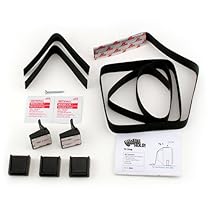
• Identify and secure large objects that could fall in a quake. Secure both top corners of tall, top-heavy desks, bookcases and entertainment centers to a wall stud -- not the drywall. Using flexible fasteners will allow the furniture to move independently, without tipping over. The flexibility also reduces strain on the studs. Move heavy objects away from sleeping and sitting areas and clear exit paths of clutter. Fasten down home electronics with flexible nylon straps and buckles.

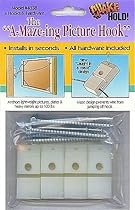
• Place only soft art above beds and sofas. Glass used for framed and other art can shatter. Consider using clear plastic or acrylic instead of glass for all hanging art. Even then, use closed hook hangers to hang objects and help prevent them from bouncing off the wall.

• Use removable museum wax or earthquake putty or gel to secure knickknacks, gewgaws, collectibles, lamps, pottery and other objects stored on open shelves and counter tops. Store heavier objects on lower shelves or inside display cases with quake or child-proof latches.

• Likewise, secure kitchen cabinets holding glassware and china, especially overhead cabinets, to prevent items from falling out and breaking during a quake.

• In the garage or storage area, move flammables and hazardous materials to low, secure areas. Make sure items stored above or beside vehicles in the garage cannot fall and damage or block vehicles and escape routes.

• Secure water and gas lines. Learn when and how to shut off water and gas lines. Have a plumber inspect pipelines and replace rusted and worn pipes. A plumber can also swap out rigid gas connections to water heaters, stoves, dryers and other gas appliances with more flexible connectors. Also consider installing excess-flow gas-shutoff valves to stop gas flows when a line springs a potentially deadly leak.

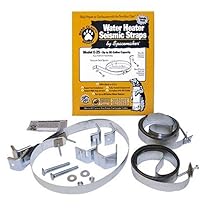
• Secure heavy appliances. Quake country law mandates that water heaters must be anchored to wall studs with metal straps and lag screws. Kits are readily available at hardware stores and home improvement centers. Likewise, secure refrigerators, free standing ranges, microwave ovens and other large, major appliances to walls using earthquake appliance straps.


5.6 Quake Considered 'Moderate'

Largest Bay Area Quake Since Loma Prieta, 1989

A moderate, but long-rumbling earthquake, magnitude, 5.6 earthquake occurred at 8:04 p.m. (PDT) on Tuesday, Halloween Eve, October 30, 2007, 5 miles to the northeast of Alum Rock, CA, an area about 10 miles from San Jose, CA's city center.

Dozens of aftershocks followed in the 1 to 2 magnitude range. The exception was a magnitude 3.7 aftershake, Halloween Day, October 31, 2007, at 3:54 p.m. with a nearly identical epicenter.

Watch the swarm of aftershocks on the US Geological Society's Quake Watch Web page.

Some isolated damage and minor injuries were reported from the initial shaker and both cell phone lines and land line phone service was temporarily interrupted over scattered areas.

(Damage Photos)

The shaker on the Calaveras Fault lasted about 30 seconds and was the most powerful tremblor to hit the San Francisco Bay Area since Loma Prieta, Oct. 17, 1989 quake rumbled through at a magnitude 6.9.

Residents are advised to inspect plumbing lines, especially older plumbling, for hairline cracks or damage. Check both water and gas lines, connections to the water heater and other appliances.

Also, use the quake as a wake up call to get prepared for the Big One. Residents should have an emergency survival kit with enough food, water and other gear to last for three days.

DeadlineNews.Com Special Report: The Big One -- Are You Ready?
'Supercrack' Shakes Up SF Bay Area
California 'Big One' Sooner Than Expected
Helping Your Home Survive A Great Quake
Preparing For A Quake With Four Times Katrina's Destruction
Great Quake Looms, Many Households Unprepared

© 2007 DeadlineNews.Com

Broderick Perkins, an award-winning consumer journalist of 30 years, is publisher and executive editor of San Jose, CA-based DeadlineNews.Com, a real estate news and consulting service, and the new Deadline Newsroom, DeadlineNews.Com's new backshop. In both cases, it's where all the news really hits home.


DeadlineNews.Com's Editorial Content Is Intellectual Property • Unauthorized Use Is A Federal Crime


Read more!