Tuesday, March 18, 2008

Fed Cuts Deep On Blue Tuesday

The latest effort to resuscitate a near comatose economy suffering from a housing market hangover, finds the Feds pushing interest rates down again, this time with one of the deepest cuts in Fed history.

by Broderick Perkins
© 2008 DeadlineNews.Com

Deadline Newsroom - The Federal Reserve reduced its benchmark federal funds interest rate by three-quarters of a percentage point on Tuesday, to 2.25 percent, one of the deepest single cuts in Fed history, but less than investors hoped for.

Why?

Not adverse to more cuts, the Fed said, "Recent information indicates that the outlook for economic activity has weakened further. Growth in consumer spending has slowed and labor markets have softened. Financial markets remain under considerable stress, and the tightening of credit conditions and the deepening of the housing contraction are likely to weigh on economic growth over the next few quarters."

Some believe the nation's economy is already in a recession, but that won't be official until after two quarters of negative growth.

The Fed has reduced the federal funds rate, six times since September -- twice in January alone.

The Fed also cut by the same 75-basis-points, the discount rate leaving at 2.5 percent.

"Today’s policy action, combined with those taken earlier, including measures to foster market liquidity, should help to promote moderate growth over time and to mitigate the risks to economic activity. However, downside risks to growth remain. The Committee will act in a timely manner as needed to promote sustainable economic growth and price stability," the Fed reported.

There remains frustration that Fed actions, including pumping billions of dollars into an anemic economy, has done little to rescue the housing sector from its deepening coma.

Even as the economy sleeps, the dollar is weaker than ever and inflation moves ahead, spurred largely by record oil prices and more expensive food.

How does this impact you?

See: Bankrate.com's Fed Watch.

© 2008 DeadlineNews.Com

Advertise on DeadlineNews.Com

Get news that really hits home for your Web site or blog from DeadlineNews.Com.


Broderick Perkins, an award-winning consumer journalist of 30 years, is publisher and executive editor of San Jose, CA-based DeadlineNews.Com, a real estate news and consulting service, and the new Deadline Newsroom, DeadlineNews.Com's new backshop. In both cases, it's where all the news really hits home.


DeadlineNews.Com's Editorial Content Is Intellectual Property • Unauthorized Use Is A Federal Crime


Read more!

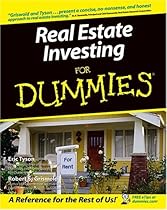
Real Estate Investment Basics

If market conditions have given you the itch to invest in real estate, treat it with education, market savvy and professional help.

by Broderick Perkins
© 2008 DeadlineNews.Com

Deadline Newsroom - It could be a good time to invest in real estate. It could be a bad time to invest in real estate.

And there's the rub.

Just like buying a home to live in, taking the real estate investment plunge requires taking stock of your financial goals, planning and lifestyle before taking the plunge.

Pretty much like buying any property.

If you've got the time, the money and the lifestyle that lends itself to managing a real estate investment, you are just about half way there.

However, both halves are pretty big halves.

The National Real Estate Investors Association says you've still got a lot of work to do.

Here's what.

Buy your own home first. Buying a home will not only put a roof over your head, but also teach you the true cost of property ownership beyond the monthly mortgage payment; give you a primer on financing; school you on how location and changing market conditions affect property values; give you the angle on tax and other home-owning benefits; help you learn about property maintenance; introduce you to a host of professionals who could prove invaluable when you really get into investments; and otherwise get you grounded for higher studies in real estate investments.

Even before home ownership, the involved process of buying a home provides basic information that later could prove invaluable to you as an investor. What's more, your first home could later become your first investment property, a property in a market with which you are familiar.

Go back to school. A booming real estate market that pushes your home value up by double digit percentages in the first year doesn't make you a market mogul any more than a housing bust should scare you off. After you buy your own home, turn to the Internet, libraries of books by reputable authors, successful, credible investment groups, college and university level courses, even your state's real estate license program. Become your own expert. You aren't required to sell homes just because you have a real estate license, but what you'll learn getting one will certainly give you a leg up on your investment moves.

Individual real estate investors, salespeople and others who you met on the way to home ownership may also be valuable resources, both for information and perhaps as a mentor. Using more than one resource will help you cancel out the bad information and ferret out the good.

Get professional help. The same way you find any competent, trustworthy and honest professional is the same way to look for a mentor, investment partner with prior knowledge or investment group. Seek referrals from friends, family, professionals with whom you already conduct business, co-workers and others you trust who've recently had a satisfactory, successful experience investing in real estate.

Someone who already knows the ropes will come in handy when you are on the ropes.

And chances are, no matter how hard you study, you'll need professional help to acquire your investment and later, beyond the buying stage, when questions arise, property management issues surface or you get bogged down by your new endeavor.

That's particularly true if you invest from a distance and buy investments away from your primary residence.

Learn your investment market. One market's bubble could be one investor's boom and another investor's bust. A home in one market could give you vacation rental income in a half year sufficient to cover the cost of principal, interest, taxes, insurance, home owner association dues, upkeep and other costs, but still not appreciate. Another home in another market may not bring you sufficient rent in a year's time to cover the cost of owning the property, but might appreciate more than enough to make up for your carrying costs over the long term.

The variables are endless and you'll need to measure your capacity for risk against market conditions.

This is where education and professional help come in. Your education should teach you not only by rote, but also how to find the answers you need. The pro is your point person and backup to help you fill in the gaps with experienced guidance.

© 2008 DeadlineNews.Com

Advertise on DeadlineNews.Com

Get news that really hits home for your Web site or blog from DeadlineNews.Com.


Broderick Perkins, an award-winning consumer journalist of 30 years, is publisher and executive editor of San Jose, CA-based DeadlineNews.Com, a real estate news and consulting service, and the new Deadline Newsroom, DeadlineNews.Com's new backshop. In both cases, it's where all the news really hits home.


DeadlineNews.Com's Editorial Content Is Intellectual Property • Unauthorized Use Is A Federal Crime


Read more!

Counselors: Lenders Foreclose Rather Than Modify

Grim. A second survey of California mortgage counselors finds more counselors reporting lenders resorting to foreclosures and short sales rather than loan modifications or workouts. Also featured: Realtytrac's Feb 2008 foreclosure reports. Brutal.

by Broderick Perkins
© 2008 DeadlineNews.Com

Deadline Newsroom - Homeowners who have problems paying the mortgage continue to have a tough time getting lenders to come to their rescue.

And if lenders won't help homeowners with mortgage troubles, who will?

Since early this year, the California Reinvestment Coalition has been tracking the fates of homeowners who seek counseling for mortgage problems.

The latest report, "The Growing Chasm Between Words and Deeds," reveals things are getting worse.

In the report, 26 of 38 mortgage counseling agencies surveyed in December 2007 -- 72 percent of them -- said foreclosure was a very common outcome for clients who seeking counseling.

That's a big leap from the 57 percent of counseling agencies that responded likewise in the original study, "The Chasm Between Words and Deeds," conducted four months earlier.

The coalition called the newest findings "shocking" amid reports that loan modification efforts like Hope Now and Project Lifeline are coming to the rescue with outreach efforts and loan modifications.


The study found, to the contrary, 91 percent of the counselors reported lenders were not making contact with borrowers before delinquency. And only 17 percent of the mortgage counselors said loan modifications were "very common."

When lenders did modify loans they did so only for one year with a fixed interest rate, according to the survey.

The survey's findings come at a time when more homeowners than ever are looking for help. In June, the California counseling agencies surveyed said they had more than 4,000 clients. In the latest study, the number had doubled to more than 8,000.

The study was conducted in California, the state with the greatest number of foreclosures. However, the report has implications for the rest of the nation because major lenders make loans throughout the nation.


Other findings include 88 percent of counselors saying short sales were either "somewhat common" or "very common."

The CRC offered three pieces of advice each for lenders and policy makers.

For lenders:

• Streamline loan modifications with lower balances and lower, fixed interest rates for the life of the loan in order to keep homeowners in their homes.

• Return foreclosed properties to the community via nonprofit groups or public agencies to prevent the homes from falling into the hands of speculators and absentee investors.

• Give greater financial support to home loan counseling agencies and legal service providers on the front lines in the battle against foreclosures.

For policy makers:

• Legally mandate modifications and refinanced loans, finalize bankruptcy reform, prohibit foreclosures without loss mitigation options, and empower a federal agency to step in to purchase distressed home loans at a discount in order to refinance loans at a low, fixed rate.

• Pass stronger anti-predatory lending legislation to thwart conditions in the future mirroring today's dilemma. Hold investors and Wall Street firms liable for violations involving financing predatory loans.

• Provide real regulatory oversight. Regulators should scrutinize efforts of loan servicers to keep borrowers in their homes and publicize the results of that oversight. and make these exams available to the public. Several loan servicers that have signed on to the California's Governor's Subprime Loan Agreement showed the poorest results in the latest survey.

• Really want to help your clients survive the downturn? Give them the content they need today. Buy content and reprint rights from DeadlineNews.Com's "Post-Booom Survival Guide"
• Also see: "Historic Price Declines Shadow Housing Market"
• Check out recent related market news in DeadlineNews.Com's Digest
• Get up to date with DeadlineNews.Com's "Boom to Bust" coverage.

Advertise on DeadlineNews.Com

© 2008 DeadlineNews.Com

Broderick Perkins, an award-winning consumer journalist of 30 years, is publisher and executive editor of San Jose, CA-based DeadlineNews.Com, a real estate news and consulting service, and the new Deadline Newsroom, DeadlineNews.Com's new backshop. In both cases, it's where all the news really hits home.


DeadlineNews.Com's Editorial Content Is Intellectual Property • Unauthorized Use Is A Federal Crime


Read more!