
by Broderick Perkins
© 2007 DeadlineNews.Com
Deadline Newsroom – Home-based business owners and other self-employed workers are the latest victims of mortgage market malaise.
Self-employed workers often use income tax returns, IRS (Internal Revenue Service) Form 1099 and related documents to prove their income and, as such, typically qualify for what's called "stated-income home loans" (SILs).
Unfortunately SILs, similar "no-doc" (for no documentation) home loans and similar mortgages are in short supply.
That's largely due to the high rate of failures that have hit the subprime and non-traditional home loan segment of the mortgage market -- even if most of the failed mortgages don't belong to the self-employed and home-based business owners.
Lenders who had portfolios heavy in any risky loans -- SILs, subprime mortgages, nontraditional home loans and others -- either failed or stopped making the loans or severely curtailed their availability to stay in business.
Today's lenders prefer writing less risky mortgages and that includes those with more conventional income documentation including pay-check stubs or statements and employer-generated IRS Form W-2.
The mortgage market squeeze has put the kibosh on SILs.
SILs remain available but the come in shorter supply with stiffer underwriting rules and higher prices.
"Most lenders now require that you have excess cash after the transaction -- reserves of three to six months," said Eric Nelson, owner/mortgage broker of The Honte Group in Campbell.
"They also pay more attention to the length of time being self-employed and they look for legitimacy of the business, meaning a copy of a business license and a certified public accountant's document that the business actually exists," Nelson added.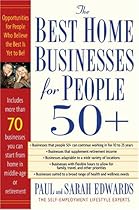
Home-based business homeowners and other self-employed workers looking to get the best SIL loan need to relearn the ropes.
Here's how.
• Put all your docs in a row. In addition to two or more years of tax returns, proof-of-licensing, business tax statements and other proof of self-employment, you should also get your professional accountant to sign off on a profit and loss or income statement to reveal home much money your business is making or losing over a specific period of time. The Service Corps of Retired Executives (SCORE) offers an online tutorial on the statement.
"Adjusted gross income (AGI) is not reflective of a self-employed borrower's true earnings and these borrowers/applicants need to work with a lender (more importantly an underwriter) who understands cash flow and reserves, which more accurately reflect what a self-employed borrower is bringing in," said Cameron Street, a mortgage broker and editorial content provider with Santa Clara-based ERate.com.
The documents can take time to gather. Begin well before you actually apply for a home loan, refinanced mortgage, equity loan or other financing that stakes your home as collateral.
• Watch those write offs. Home-based businesses, like any business, get a plethora of tax write offs, from office supplies to health insurance, but the deductions reduce the amount of income against which taxes are calculated. A smaller income makes it tougher to quality for a mortgage.
• Use a savings strategy. The larger your down payment the better your eligibility requirements for the best, least expensive loan terms. If a lender offers a SIL it likely wants to reduce its risk.
• Crank up your credit rating. Good credit has never been more critical. Lenders have upped the credit score and credit report ante. Visit MyFico.com and learn what hurts and helps your credit score and credit standing. Keep tabs on your credit report, but only from AnnualCreditReport.com. Every four months, rotate obtaining one free report from one of the three major credit reporting agencies, to space out self-monitoring of your credit report.
Experts say the tighter underwriting standards alone shouldn't be enough to make home-based business owners and self-employed workers veer from their career path.
"There's nothing wrong with working from home, particularly in the San Francisco Bay Area where real estate and office lease expenses run through the roof. What you don't spend each month in the way of a lease goes straight to your bottom line," said Street.
© 2007 DeadlineNews.Com
Broderick Perkins, an award-winning consumer journalist of 30 years, is publisher and executive editor of San Jose, CA-based DeadlineNews.Com, a real estate news and consulting service, and the new Deadline Newsroom, DeadlineNews.Com's new backshop. In both cases, it's where all the news really hits home.
DeadlineNews.Com's Editorial Content Is Intellectual Property - Unauthorized Use Is A Federal Crime
Read more!


